
Octopus
When a local legend becomes the architecture of play, and a child climbs inside the belly of an island creature.
Every island has its creature. On Krk, it's the octopus.
The octopus, known locally as mrkač in the dialect of Krk, is more than a marine animal. It is part of the island's identity. Fishermen know it, children search for it in the shallows, visitors photograph it. It is so deeply embedded in the everyday life of Krk that it has taken on an almost mythical quality.
When we approached the playground project at Glavotok Campsite in 2024, the question was never what to build. It was how to build something that truly belongs to this island, this campsite, and these children, in a way that no generic piece of equipment from a catalogue ever could. The answer was in the sea, twenty metres from the edge of the site.
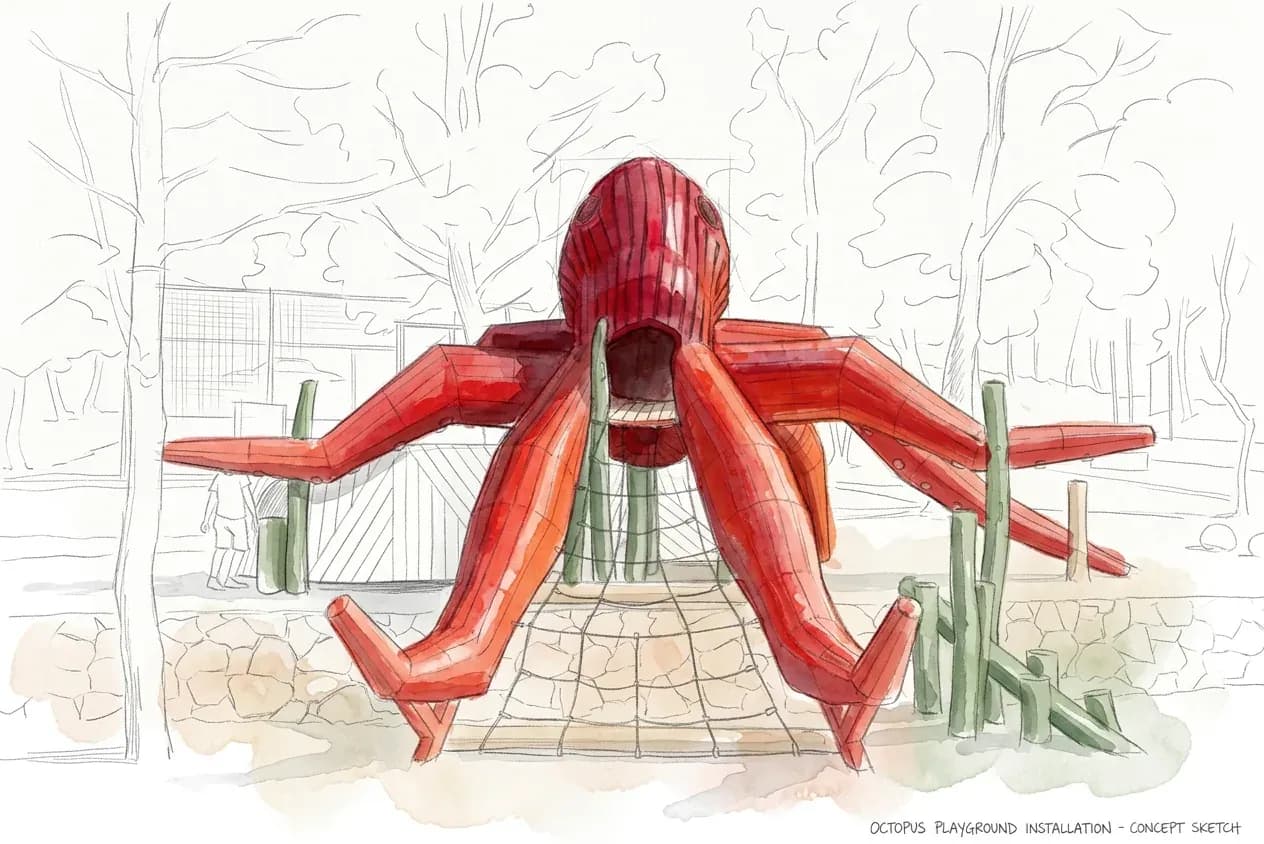
4.5 metres tall. 8 metres wide. One creature.
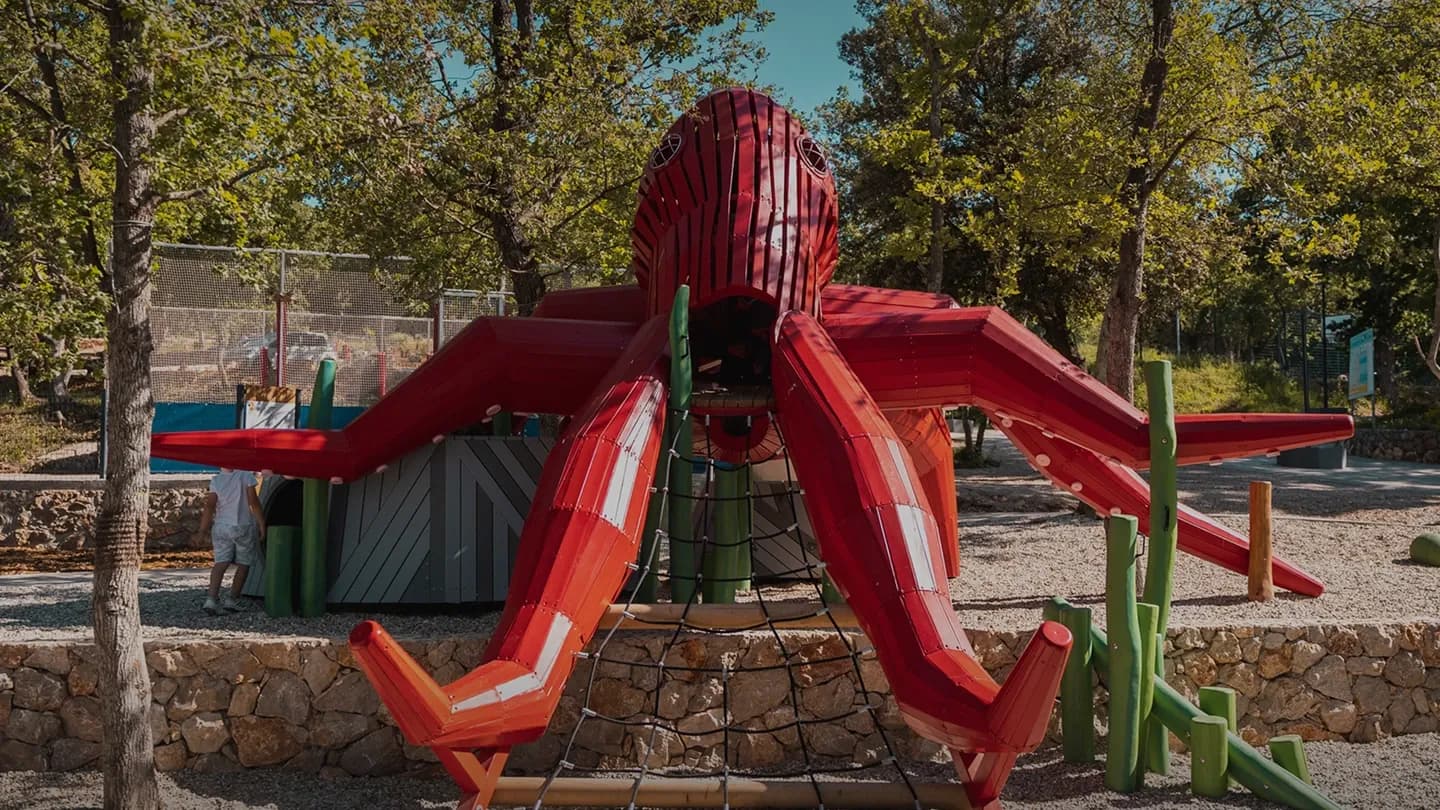
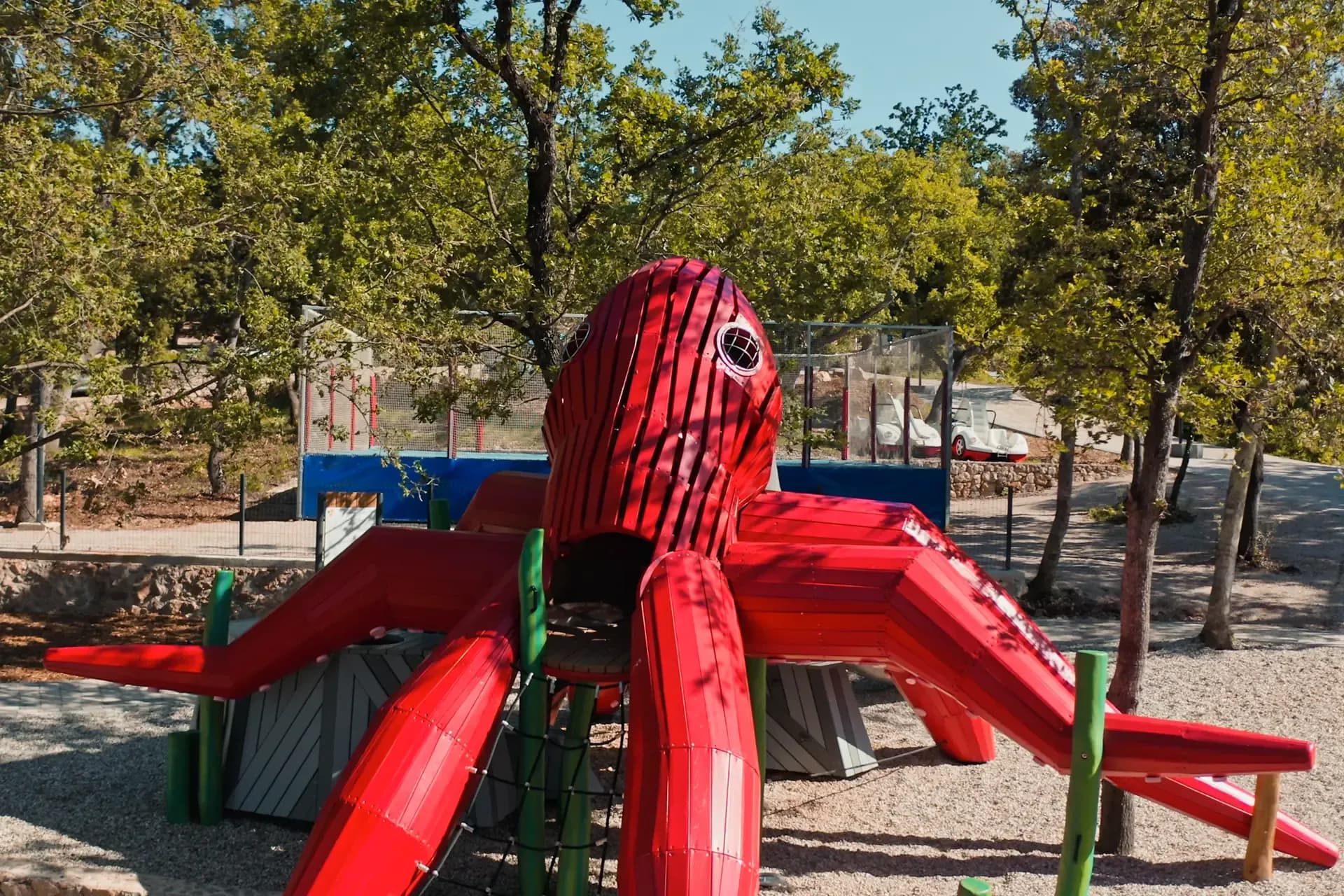
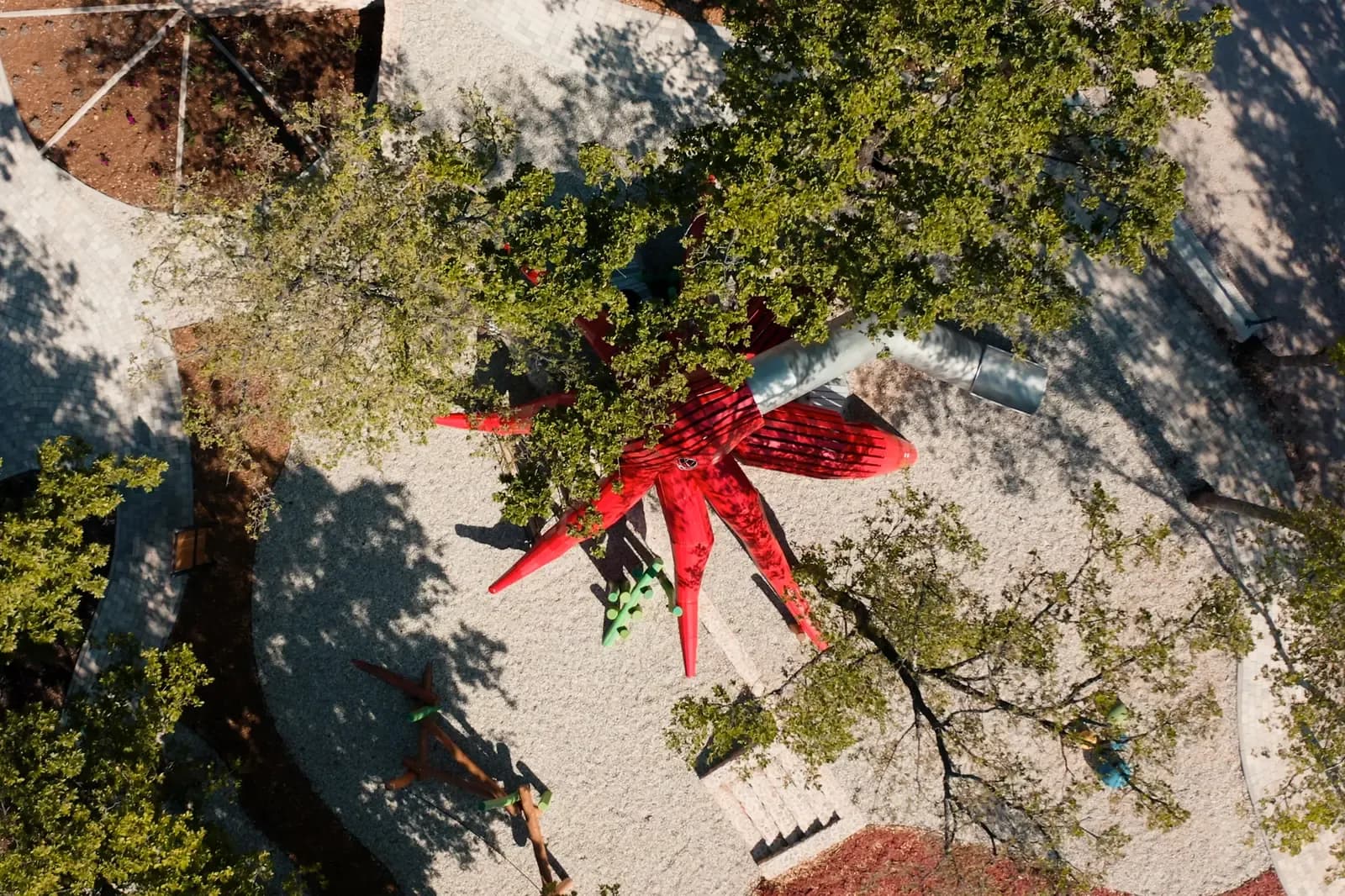
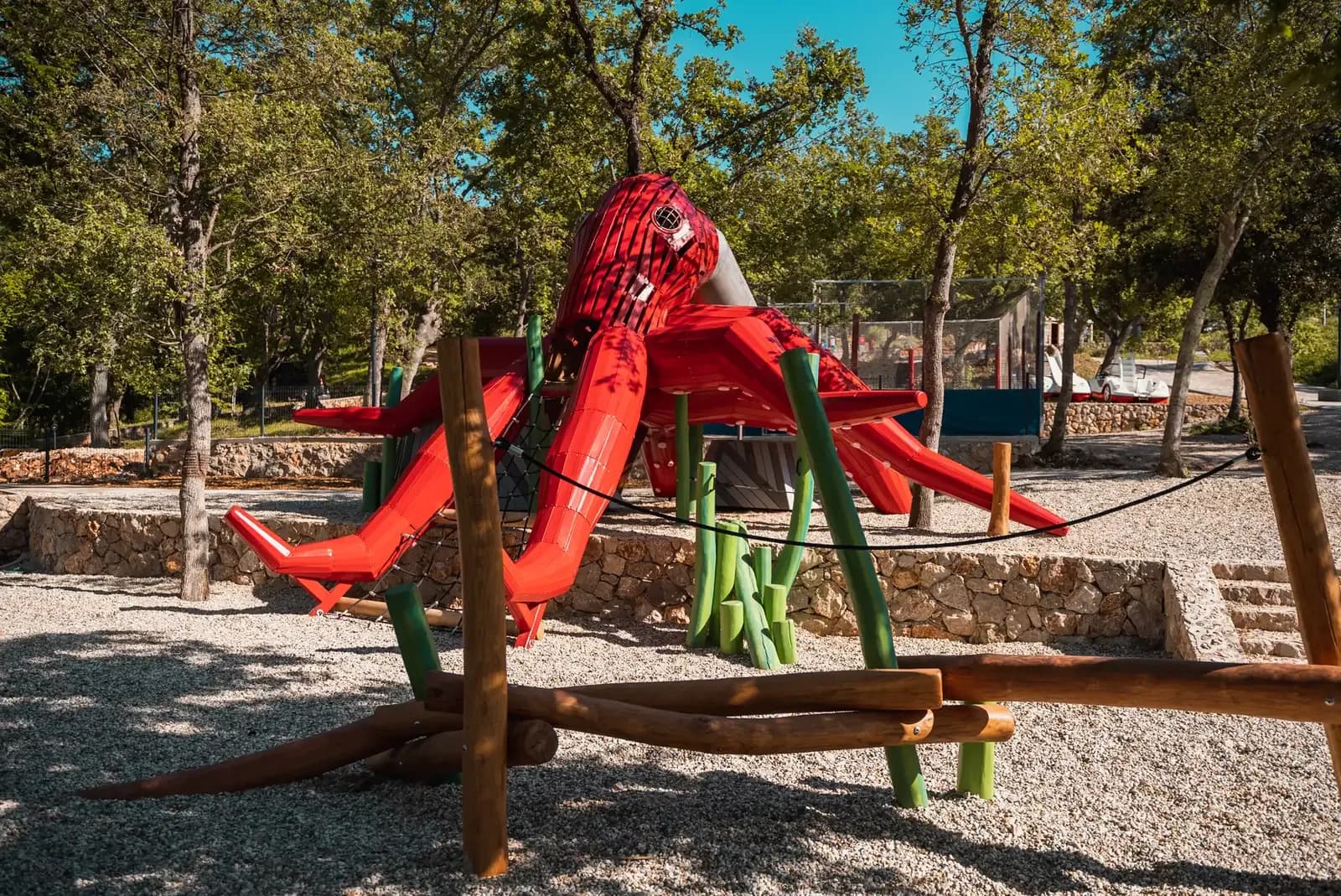
The central form of the octopus was designed as a sculptural object whose volume conceals a multi-level play system. The head stands 4.5 metres tall and dominates the space, visible from the road, from across the campsite, from the canopy of the surrounding oak trees. Eight arms extend to a total span of 8 metres, each functioning as a separate slide, ramp, or climbing surface.
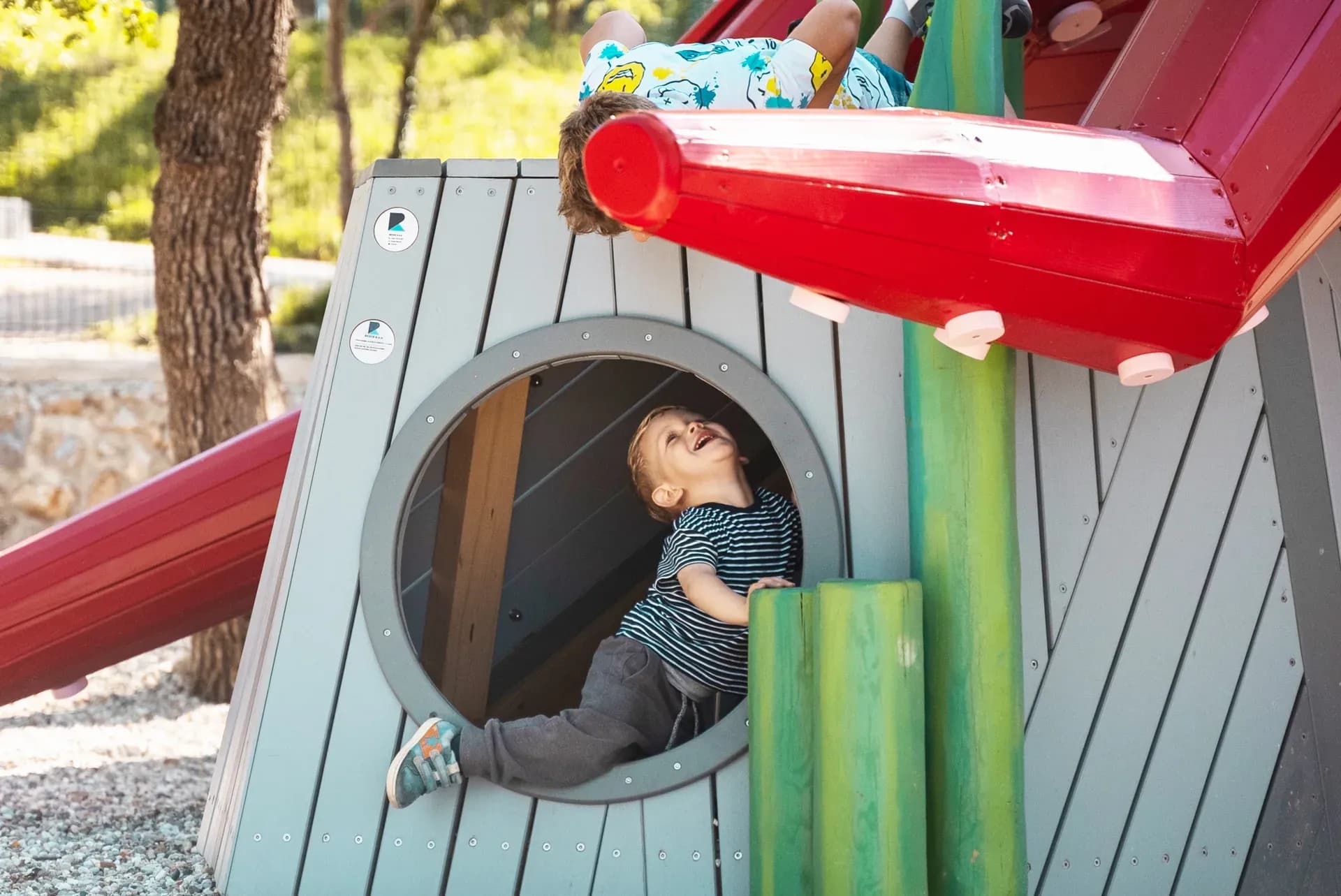
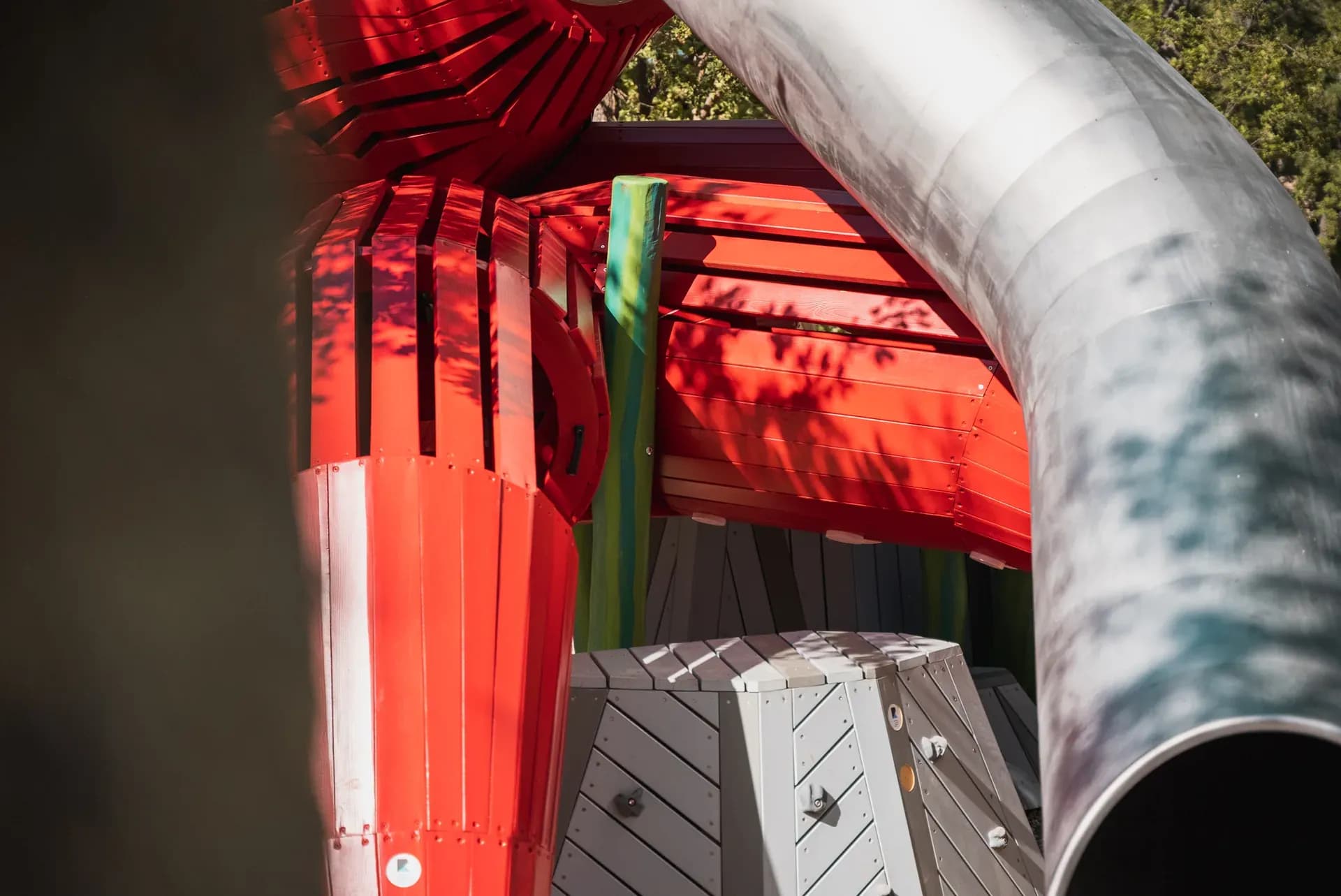
The body is not solid, it is open. The laminated timber cladding in its characteristic red allows light to filter through the gaps, creating a play of shadow and light in the interior. A child who enters the belly of the octopus doesn't enter a dark tunnel, they enter a space that breathes.
The material choice was unambiguous: timber. Not only for aesthetic reasons, but for the counterpoint it creates with the dry-stone walls and Mediterranean gravel that define the ground of the campsite. The red colour of the octopus is not a decorative decision. It is a biological reference: the colour of a living octopus under stress. Red was not chosen because it's striking. It was chosen because it's accurate.
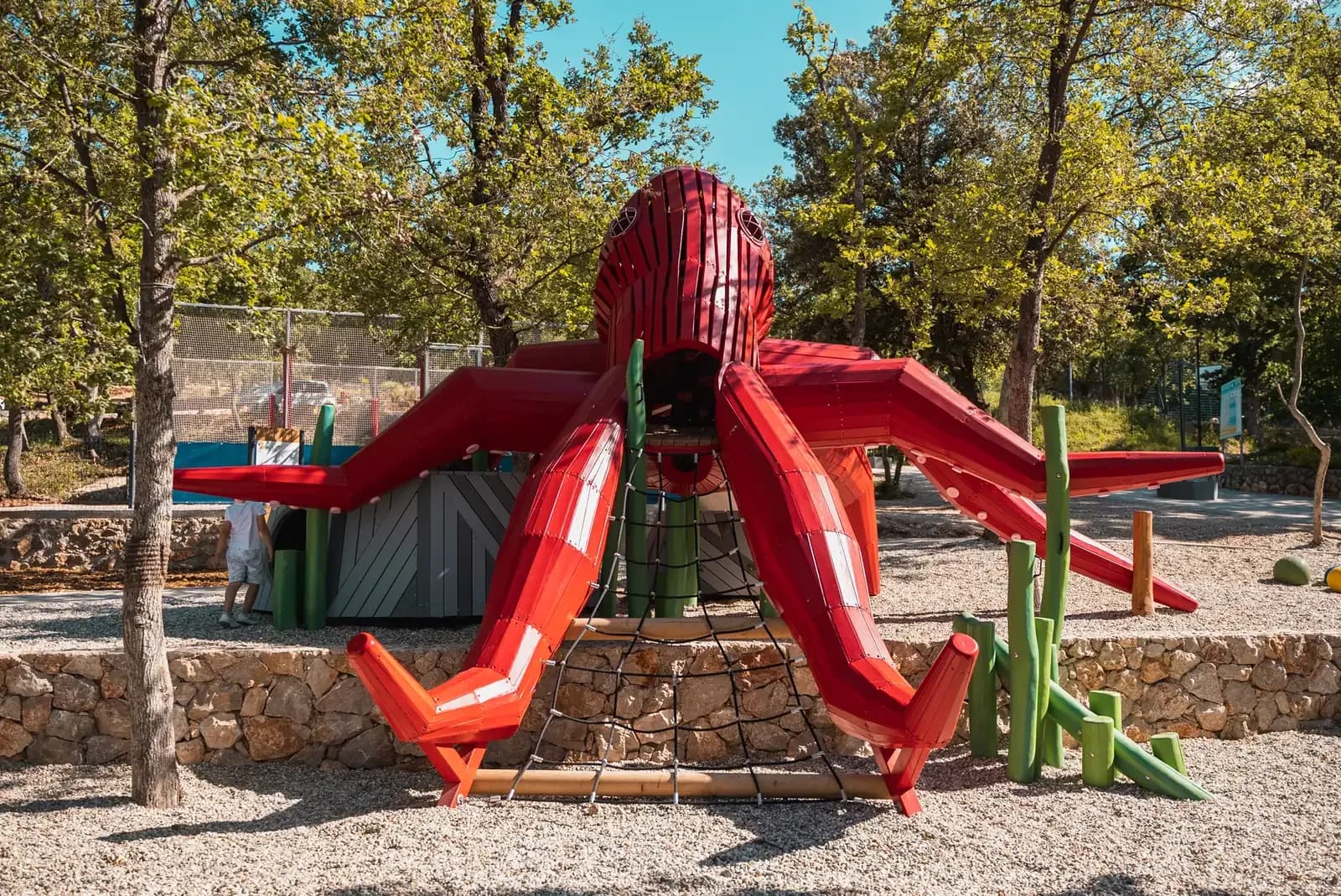
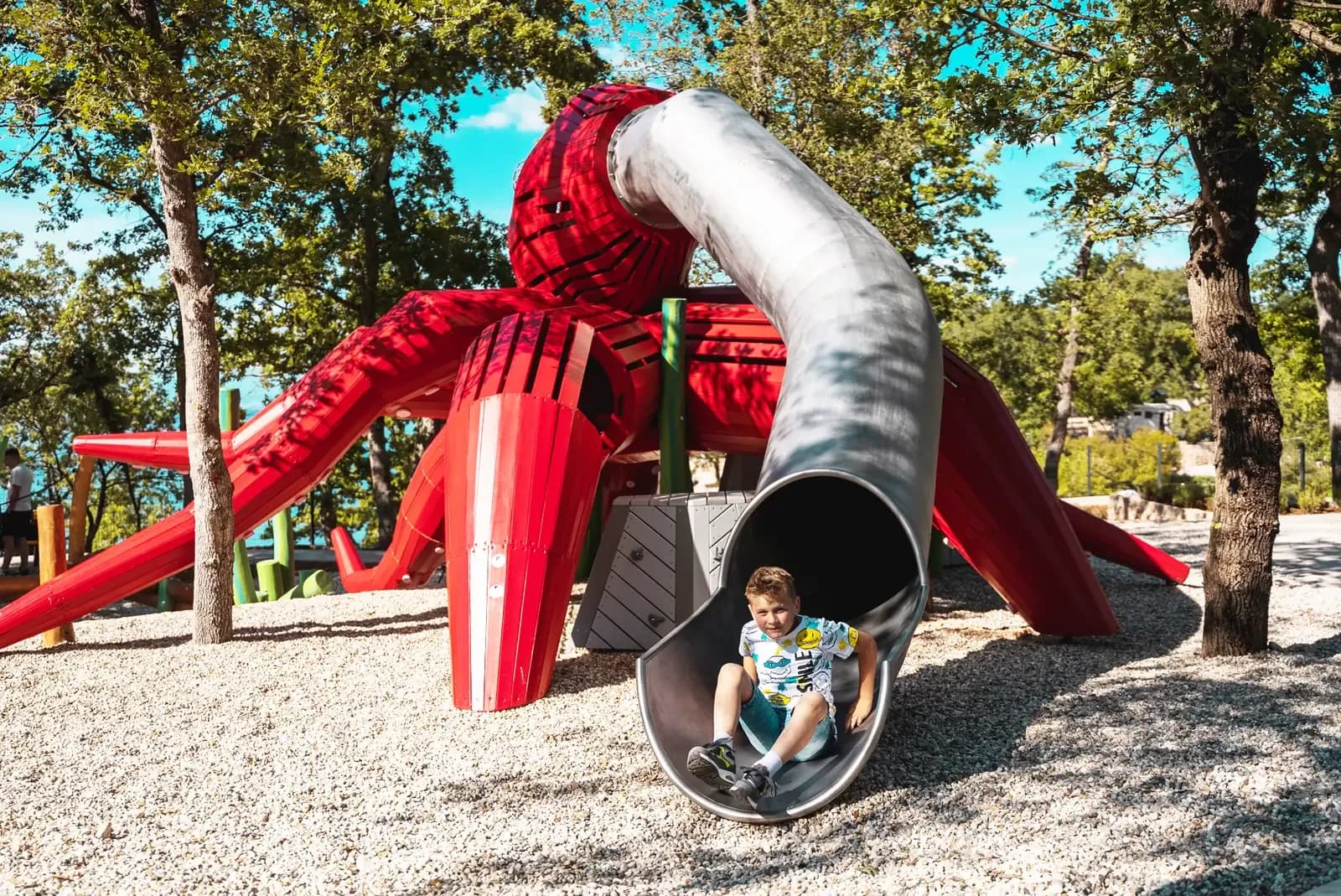

Every arm tells its own story.
Designing eight arms as eight distinct play experiences was one of the central design requirements. The octopus must not be symmetrical, neither visually nor functionally. Every child must be able to find their own route.
Eight arms. Eight stories. One creature.
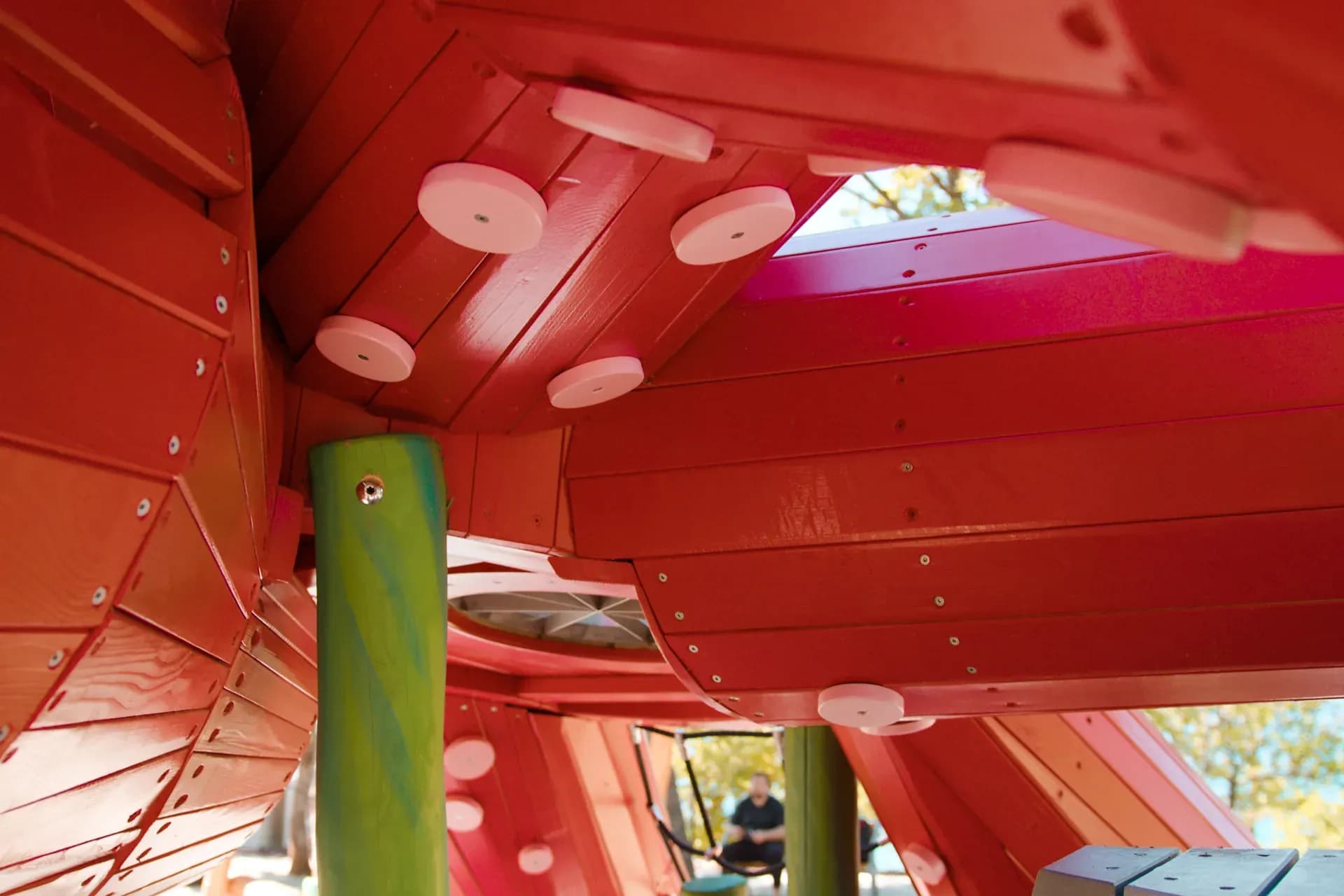
A structure that requires the whole body, and the whole child.
The octopus was not designed for one type of play. It was designed as a system of challenges that children of different ages, temperaments, and physical abilities can engage with in entirely different ways.

Designed experiences
Body and Head, Interior Space
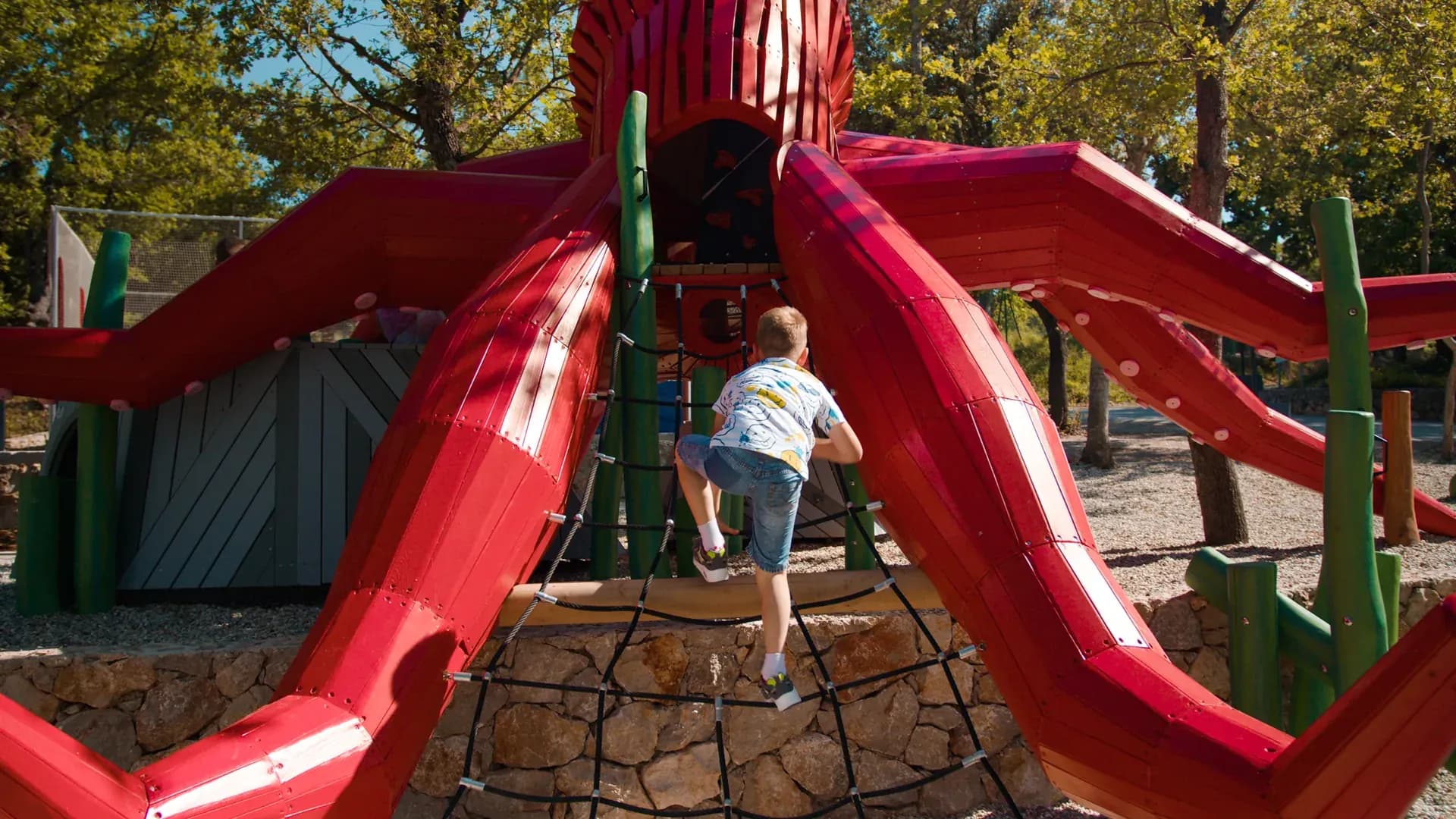
The interior of the octopus is organised as a tall, open space with a rope net floor that filters the view towards the ground below. The net entry at the base invites climbing: a child doesn't enter a structure, they climb into a creature.
Stainless Steel Tube Slide, 60 cm Diameter
The spiral tube slide exits the body of the octopus and ends among the oak trees. The entry point is high, the descent is long, and the exit is unexpected: each time, the child chooses whether to turn left or go straight.
Climbing Surfaces and Rope Nets
A rope climbing net is integrated into the base of the octopus body, laid directly over the dry-stone wall that defines the ground level. The combination of stone and net is deliberate: it evokes the rocky surfaces a real octopus moves across.
Sea Grass Elements, The Underwater Landscape
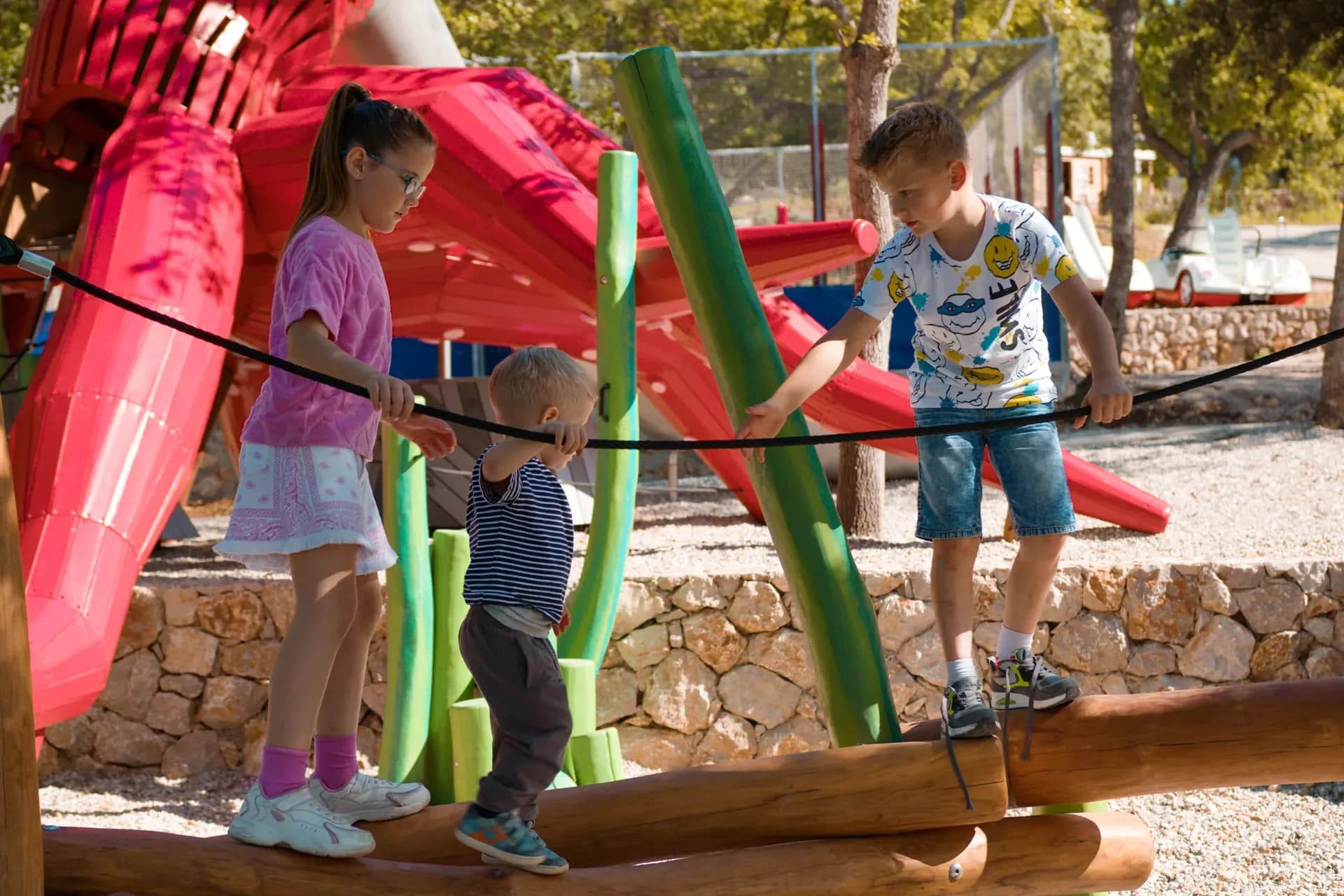
Scattered across the gravel around the octopus, green cylindrical elements imitate sea grass. They are not decoration. They are spatial markers that tell children, without a single written word: this is the sea floor. This is where the octopus lives.
Play that becomes memory

Physical Development
Climbing the rope net, descending the spiral tube slide, balancing along the arms, and squeezing through narrow openings all engage gross and fine motor skills, coordination, and balance. There are no flat surfaces, every element requires the body to adapt.

Cognitive Development and Risk Assessment
Which route? Which arm? Will it hold? These questions, which children ask themselves without anyone prompting them, are the foundation of executive function development: planning, assessment, and decision-making. The structure offers challenge but never imposes a solution.

Social Play
The octopus is too large for one child. It invites a group: someone climbs, someone waits, someone calls instructions from above, someone hides in the interior. Spontaneous social dynamics emerge without a single adult directive.

Connection to Local Identity
A child who grows up near Krk will not forget that they once climbed inside an octopus. That connection between play, place, and local culture is not trivial, it is one of the ways in which childhood shapes identity.
An island creature that could only live here.
Glavotok Campsite sits on the island of Krk, where oak forest meets Mediterranean gravel and dry-stone walls define the terrain, twenty metres from the edge of the Adriatic Sea. An octopus emerging from a dry-stone wall, between oak trees, with a view of the sea, is exactly where it needs to be. It is not generic. It is not interchangeable. It cannot be reproduced anywhere else. It belongs to Krk.
We didn't install a structure in a campsite. We embedded a local legend into a child's memory.
This is not a sculpture with a slide. This is an octopus.
The Octopus project at Glavotok Campsite demonstrates what happens when a structure is not ordered from a catalogue but designed from a place. When material is chosen not for cost but for story. When colour is not decorative but ecologically precise. Children who climb into its belly, slide from its arms, and balance along its edges are not playing on equipment. They are stepping into a story the island has always told about itself.
Ready to shape space together?
Every project starts with understanding the space and the people who will use it. Whether you are planning a project or exploring ideas, this is where the conversation begins.