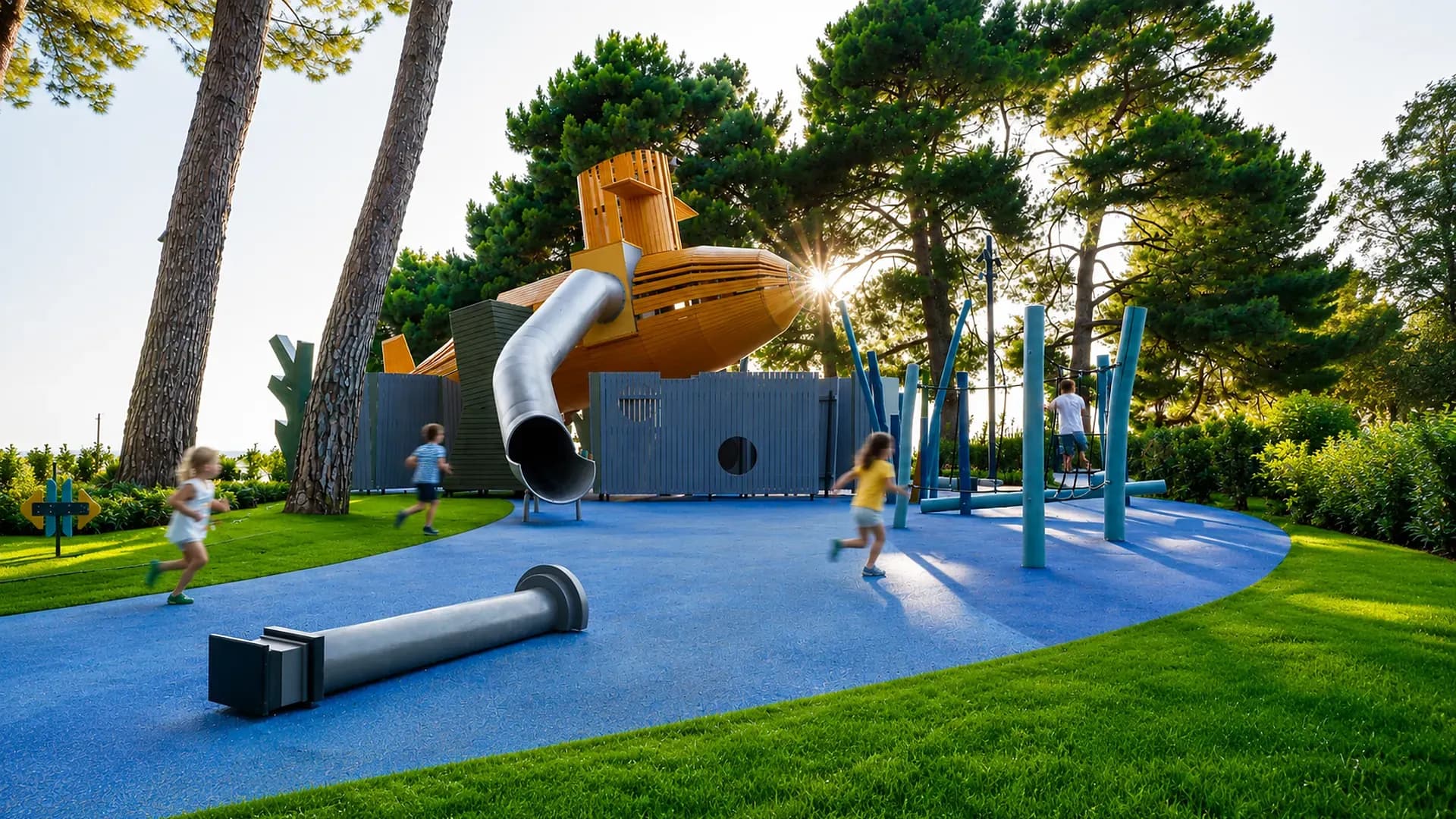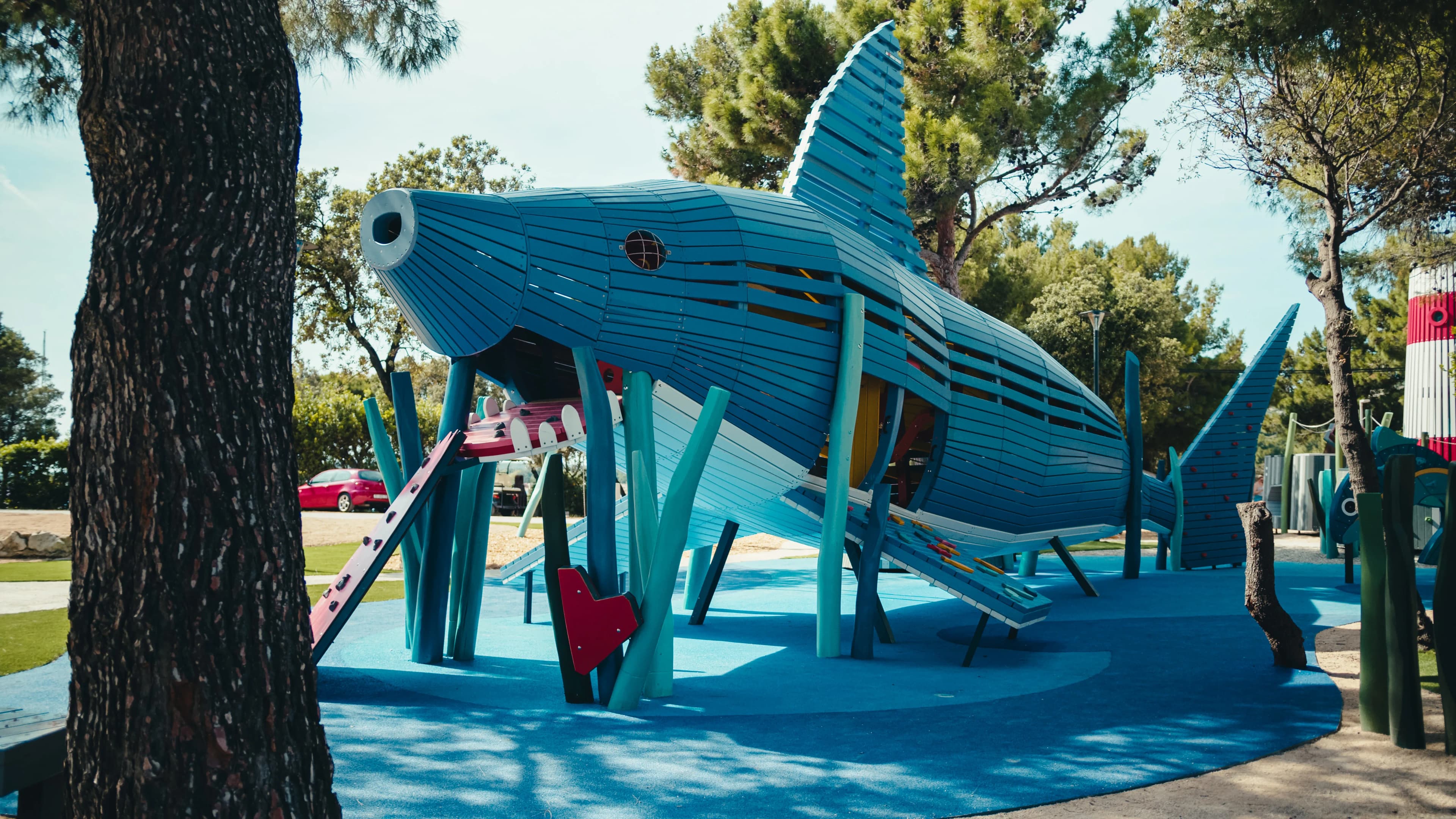

Fly to the Moon
When a theme isn't decoration but architecture, and when a child must earn the view from the top.
A place that chose to invest in imagination.
When Makarska Observatory commissioned us to design this public space, the conversation didn't begin with equipment, it began with a question: what does this place want to say to the children who visit it? What does it want them to feel as they explore the space between Mount Biokovo and the Adriatic Sea?
From that conversation, a theme took shape. Not a playground, not a play area, but a space mission. A place that doesn't tell children to 'go play', but says: 'set off on a journey'.
The theme isn't decoration. The theme is structure.
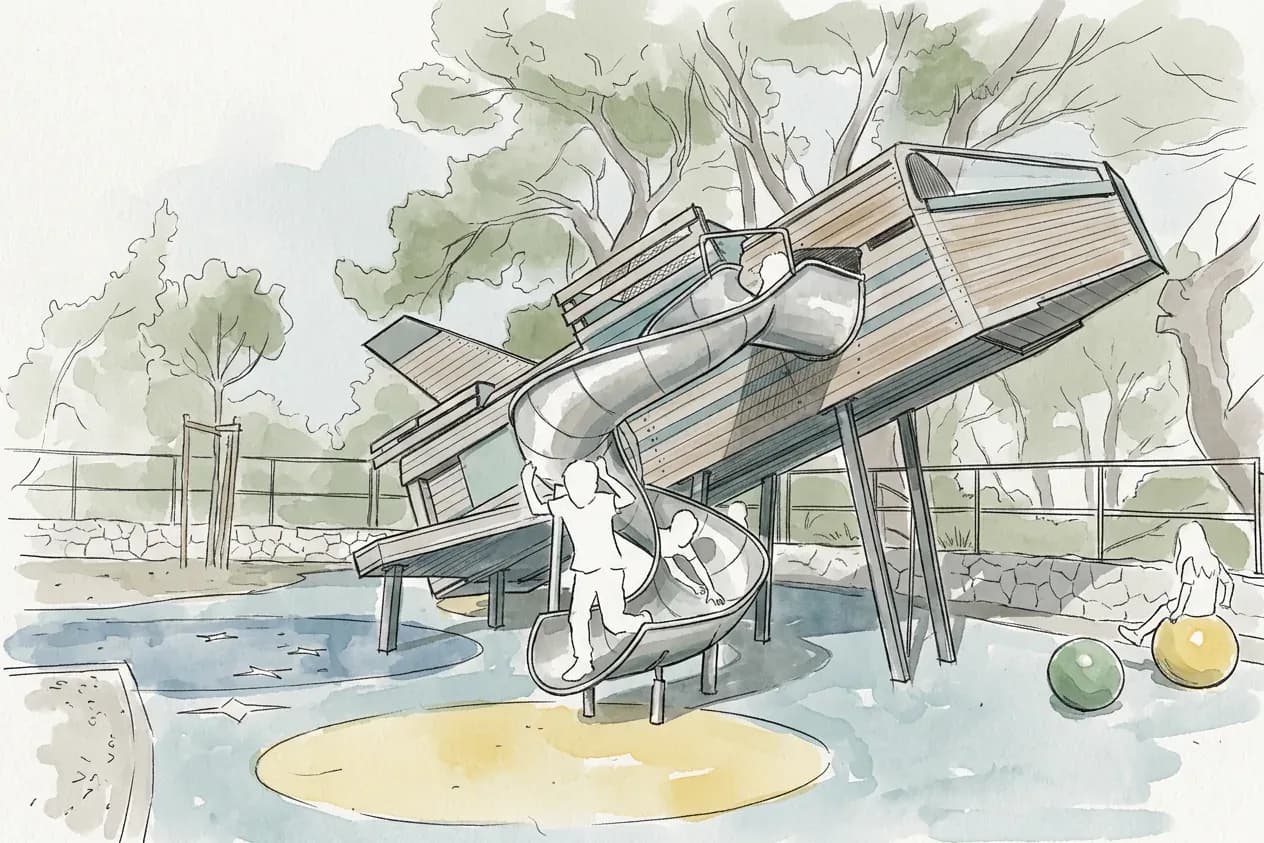
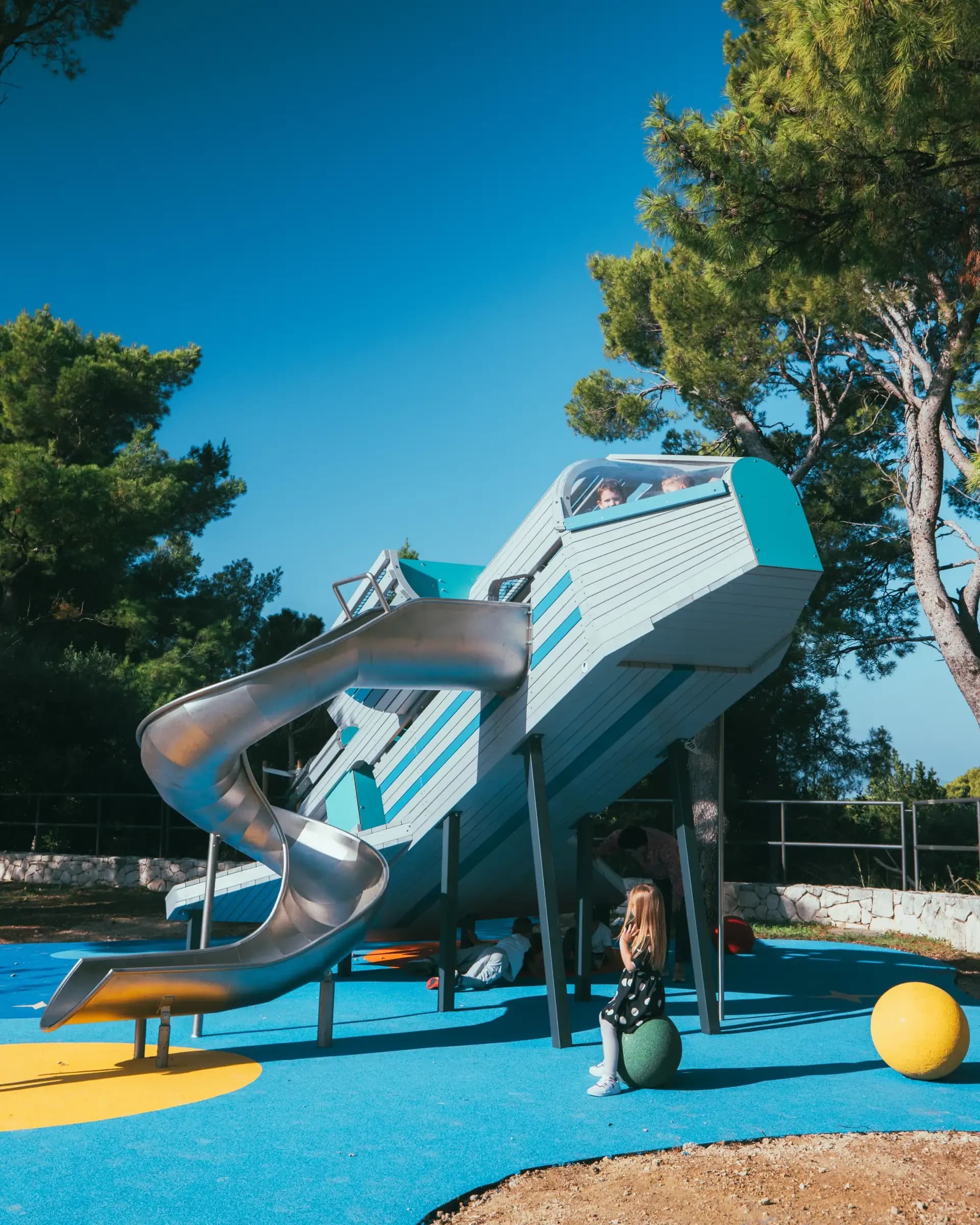
The decision to make this project thematic wasn't an aesthetic one, it was a design one. When a theme exists from the very first sketch, every element has a reason to be there. The rocket wasn't shaped the way it was because it looks striking. It was shaped that way because it's the logical heart of the mission, something to be conquered, something with an interior, with levels, and with a summit that must be earned.
The space narrative here isn't a costume draped over a standard structure. It's the organising principle that determines where the openings are, where the ladders lead, why hidden passages exist, and what a child sees when they finally reach the top.

Verticality as a design tool.
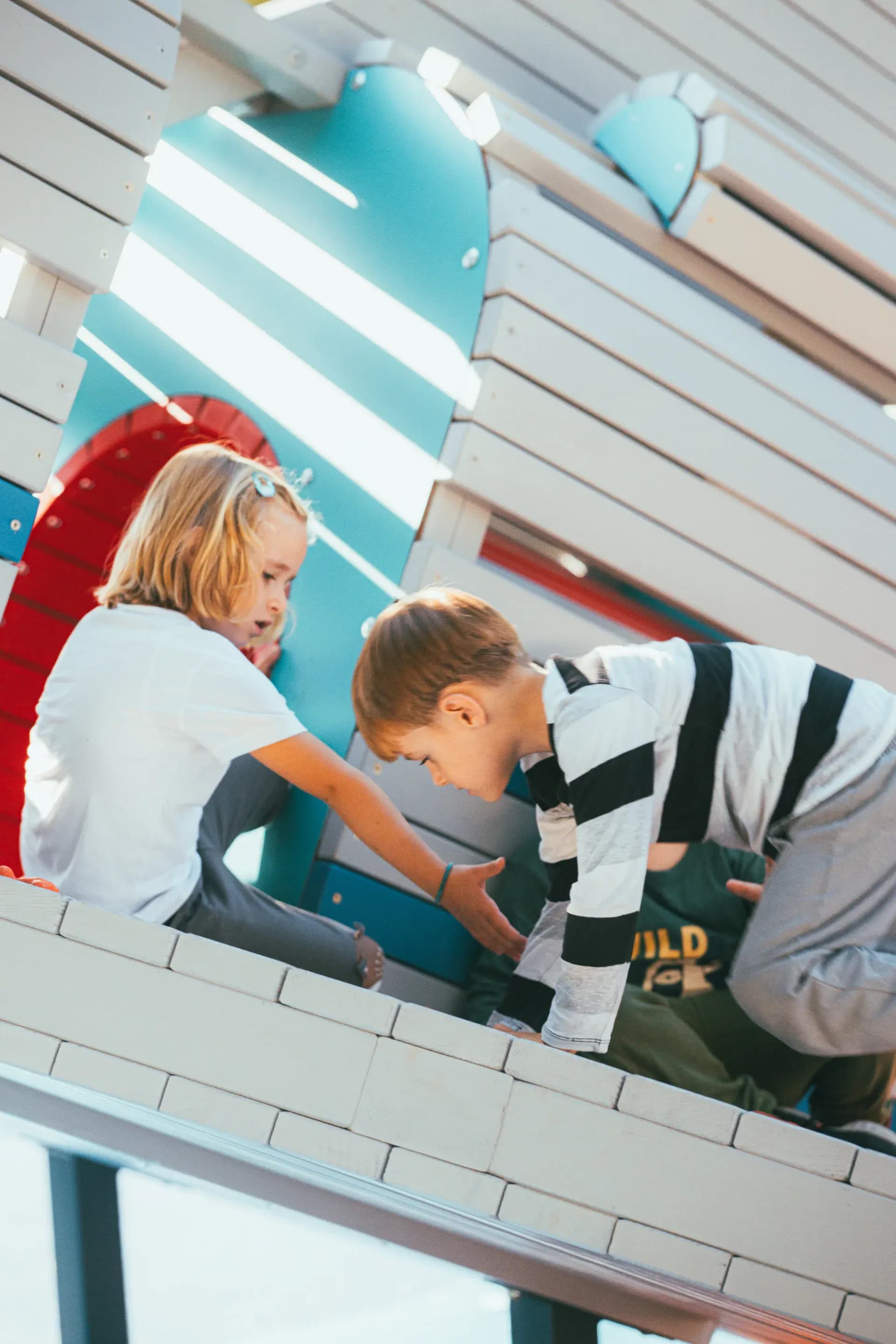
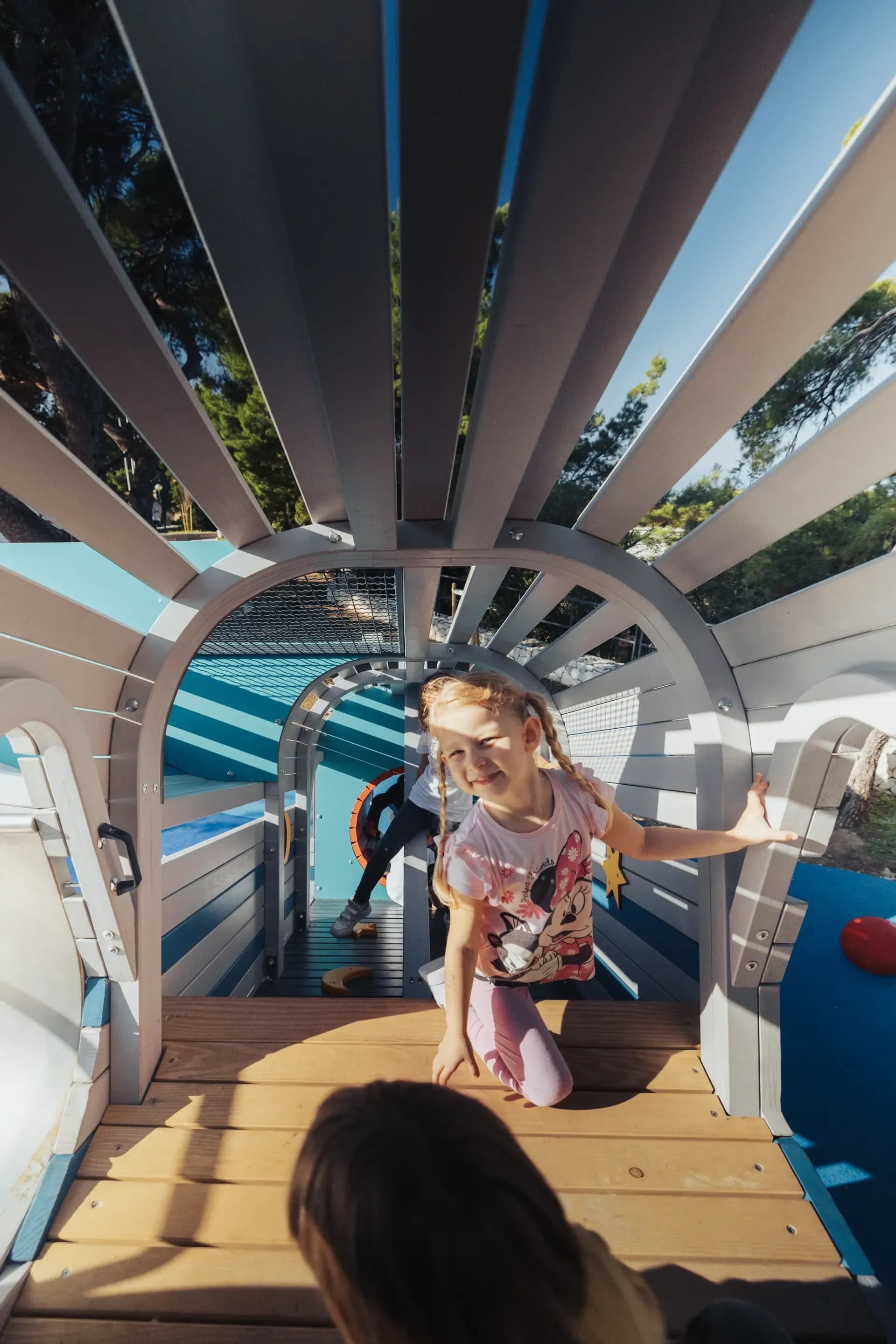
The spatial concept is built around a vertical experience. A child doesn't arrive at the playground and immediately reach the top, they must start, choose a route, meet a challenge, perhaps reconsider and try a different path. That structure is entirely intentional. Nets, ladders, and hidden passages aren't simply different ways to climb. They are deliberately designed for different types of children: the bold and the cautious, the fast and the methodical, the leaders and the followers.
Start. Choose. Climb. Arrive.
Play that leaves a lasting mark.
A children's space that is merely safe is not enough. It must also be challenging, because children grow through obstacles, not around them. Every element of this project was designed with a clear intention: to stimulate development on multiple levels at once.
Designed experiences
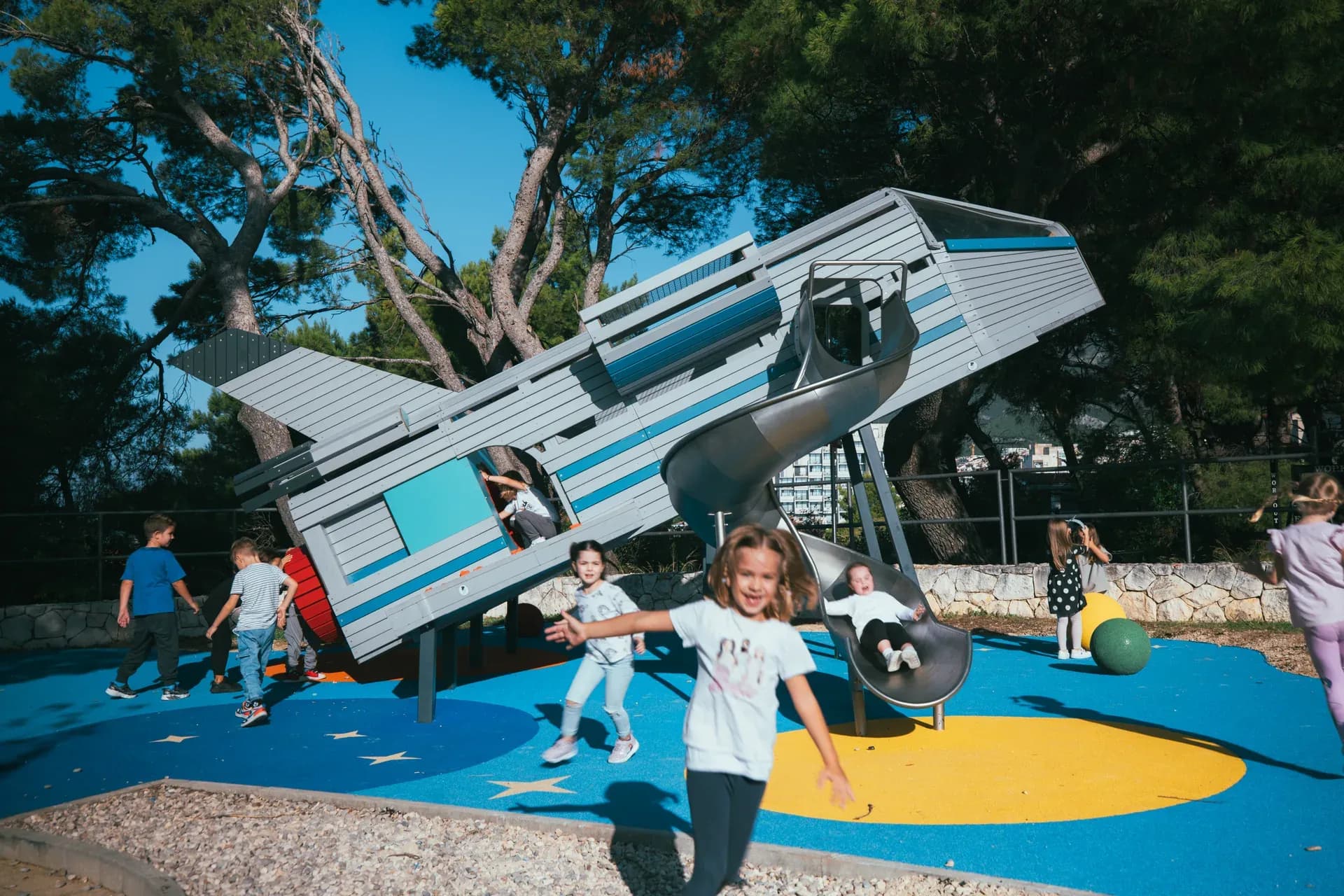
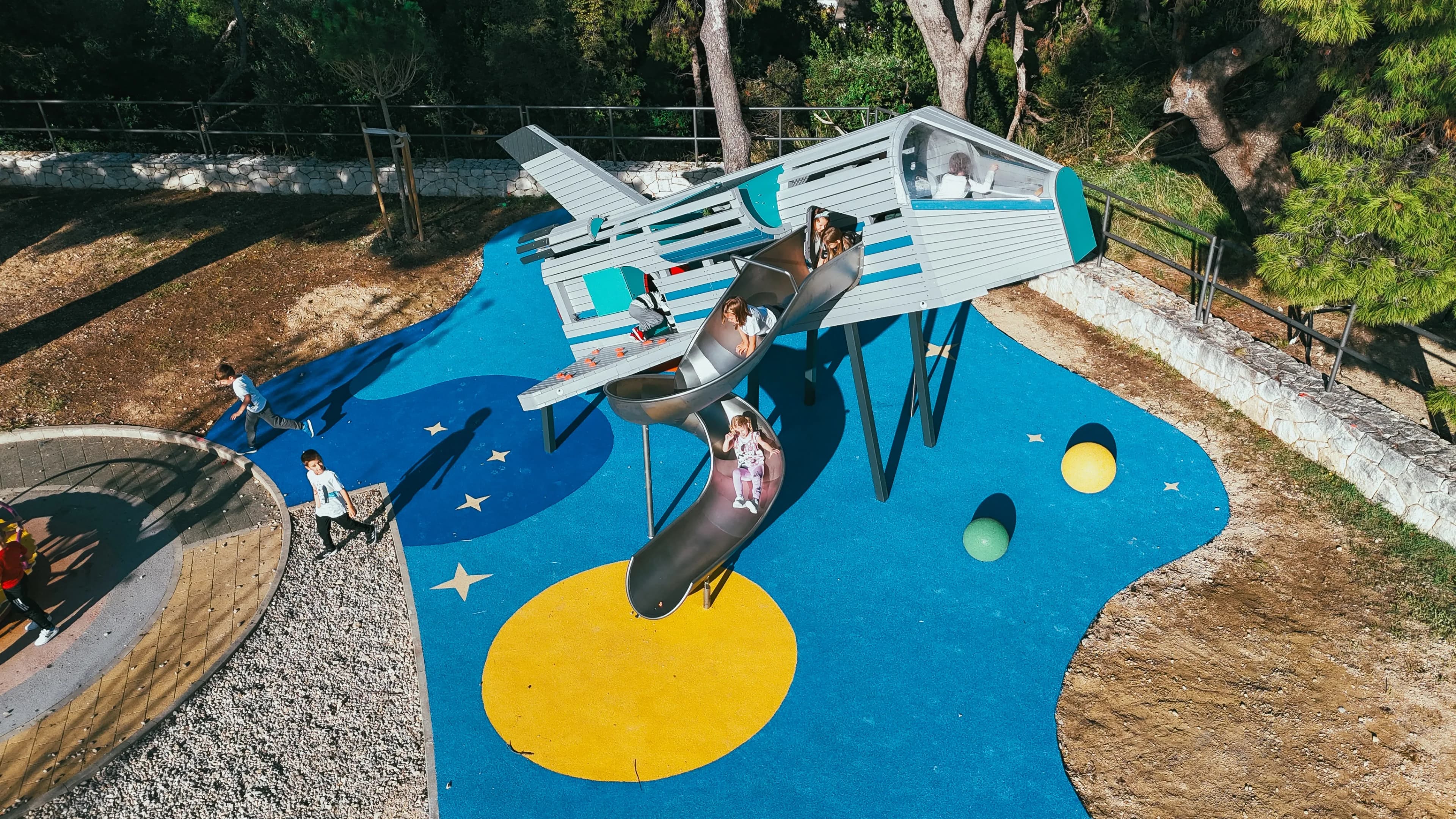
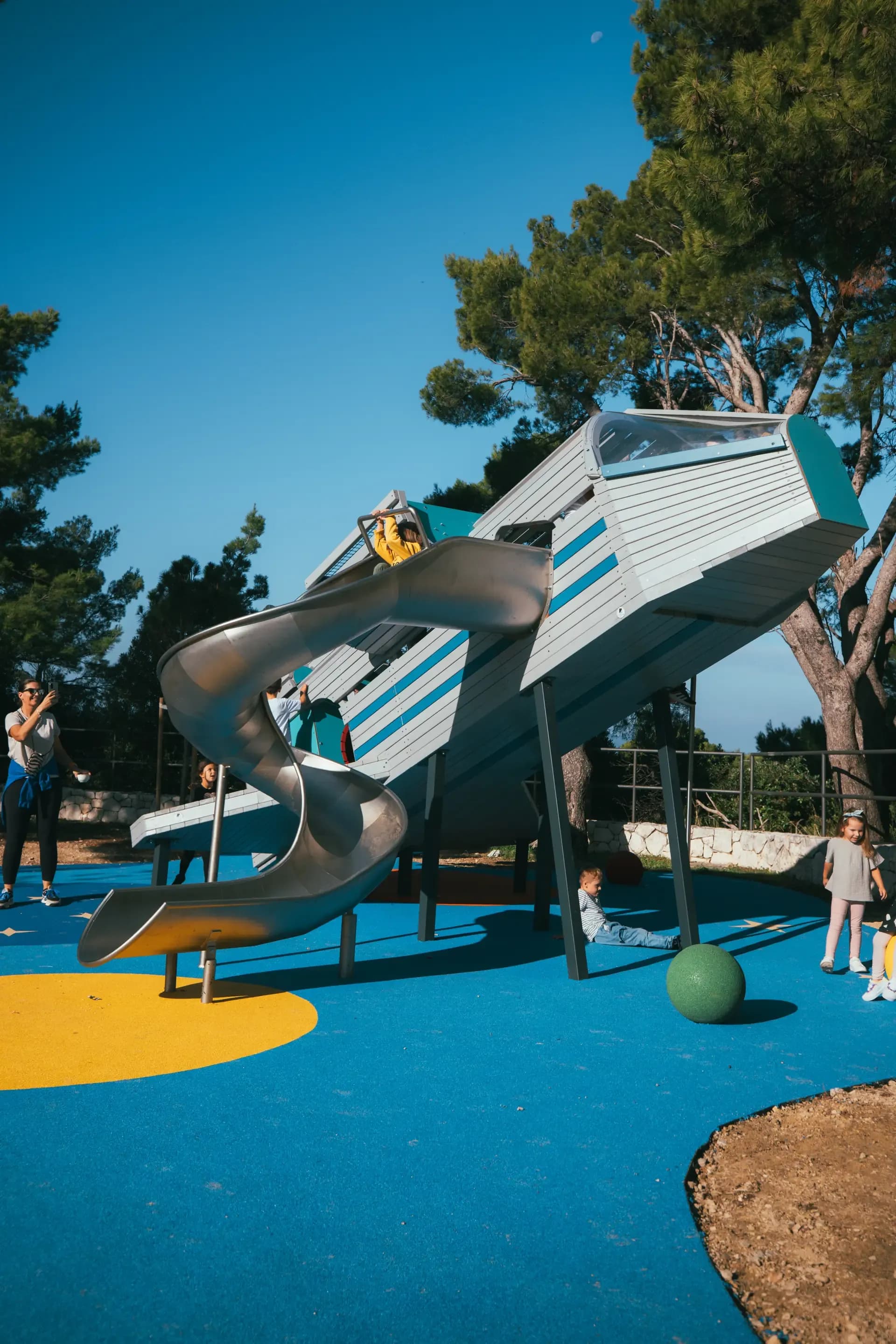
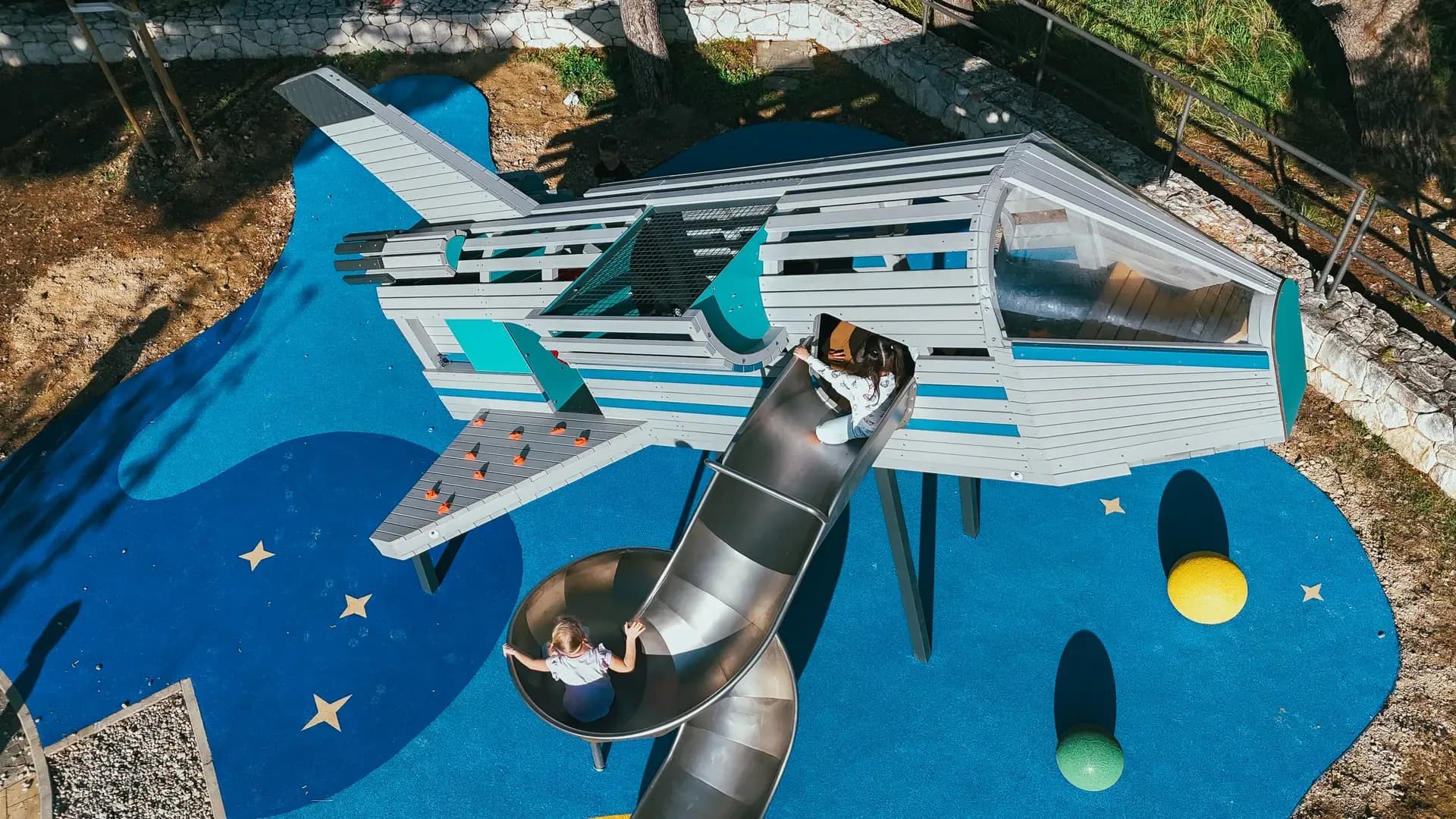
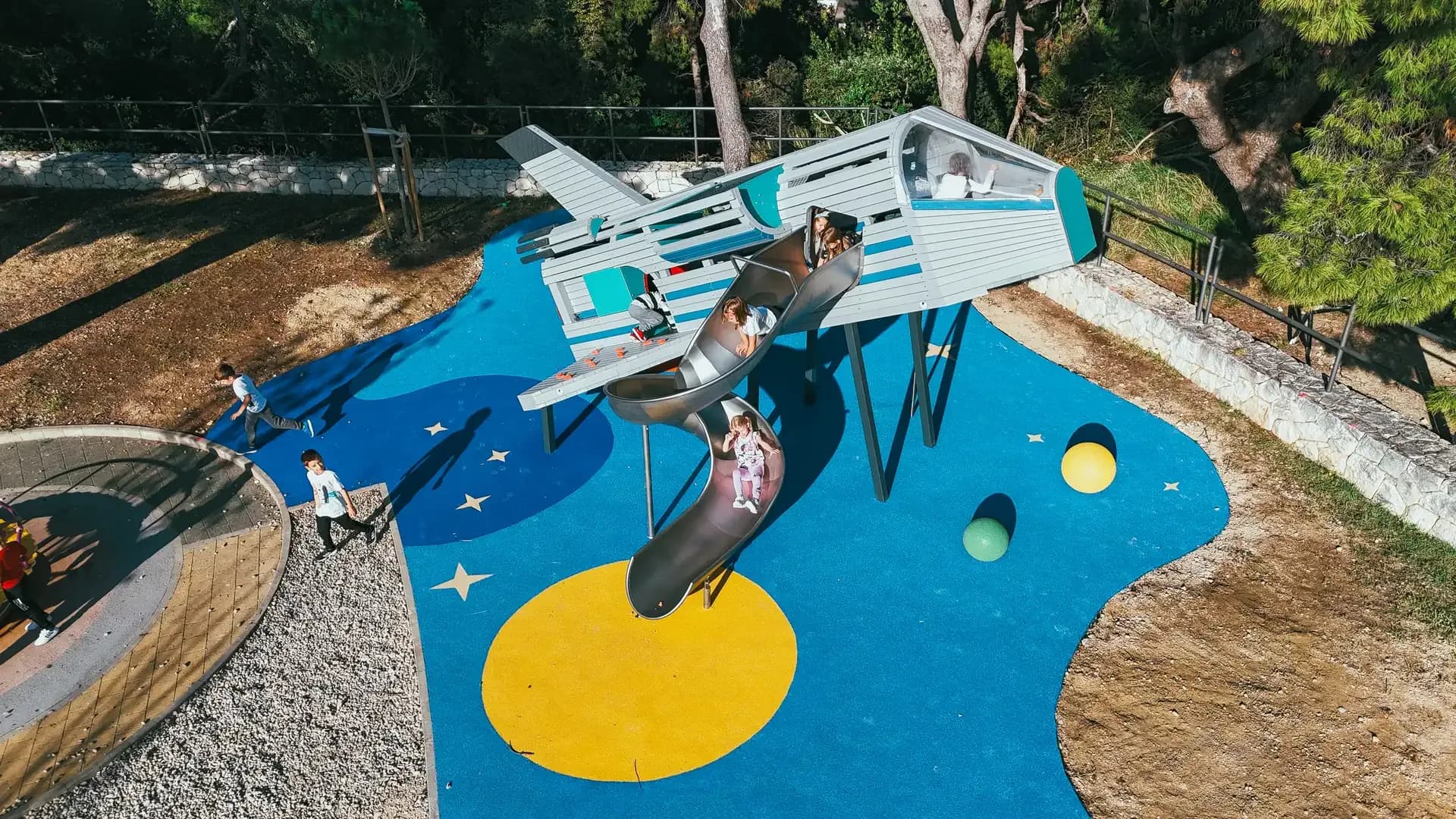
Rocket, Central Sculptural Form, ~4 m
A multi-level structure with a clear internal movement architecture. Organised so that children of different ages can use it simultaneously, each on their own level, their own route, their own mission, without conflict and without boredom.
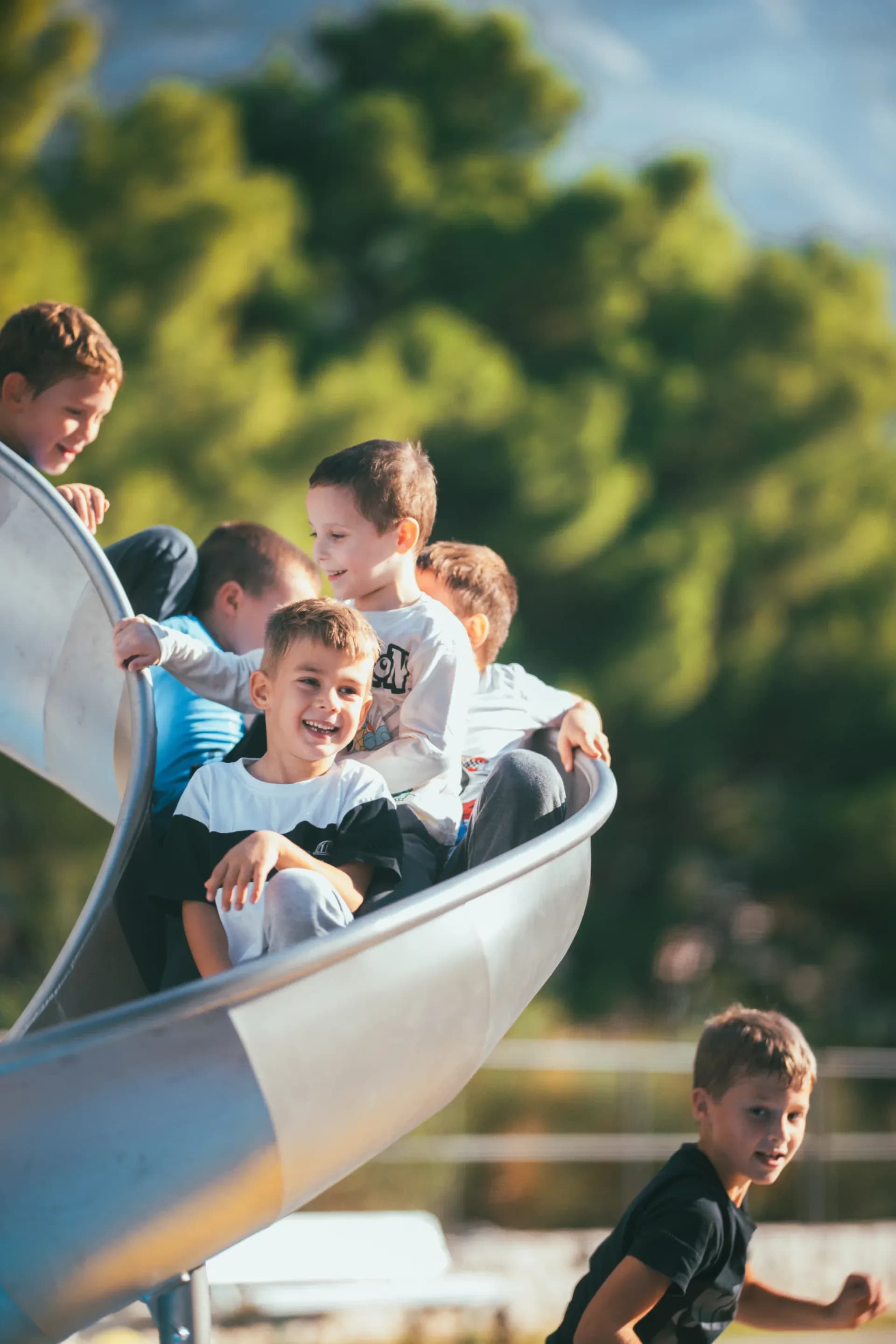
Spiral Slide, The Culmination of the Experience
Designed as the dramatic peak of the descent, not as a functional add-on. The spiral geometry extends the sensation of sliding and makes the ride genuinely memorable. Fabricated in stainless steel, resistant to Mediterranean coastal conditions and built to last for generations.
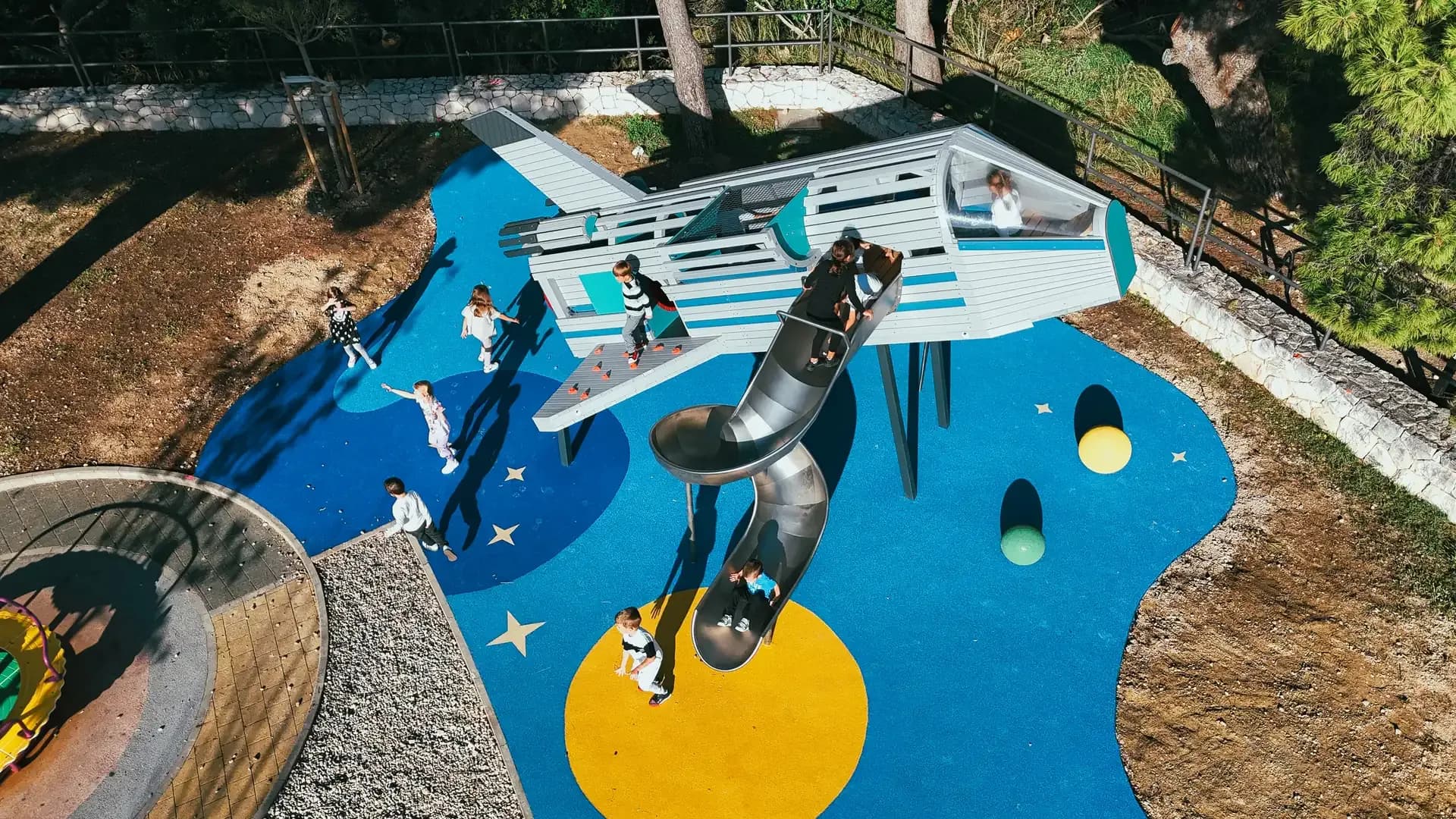
Thematic Safety Surfacing, A Floor That Tells a Story
Planets, stars, and orbital paths printed on the rubber surfacing aren't graphic decoration, they're a continuation of the narrative. Children play on it before they ever set foot on the structure. The adventure begins the moment they step onto the ground.
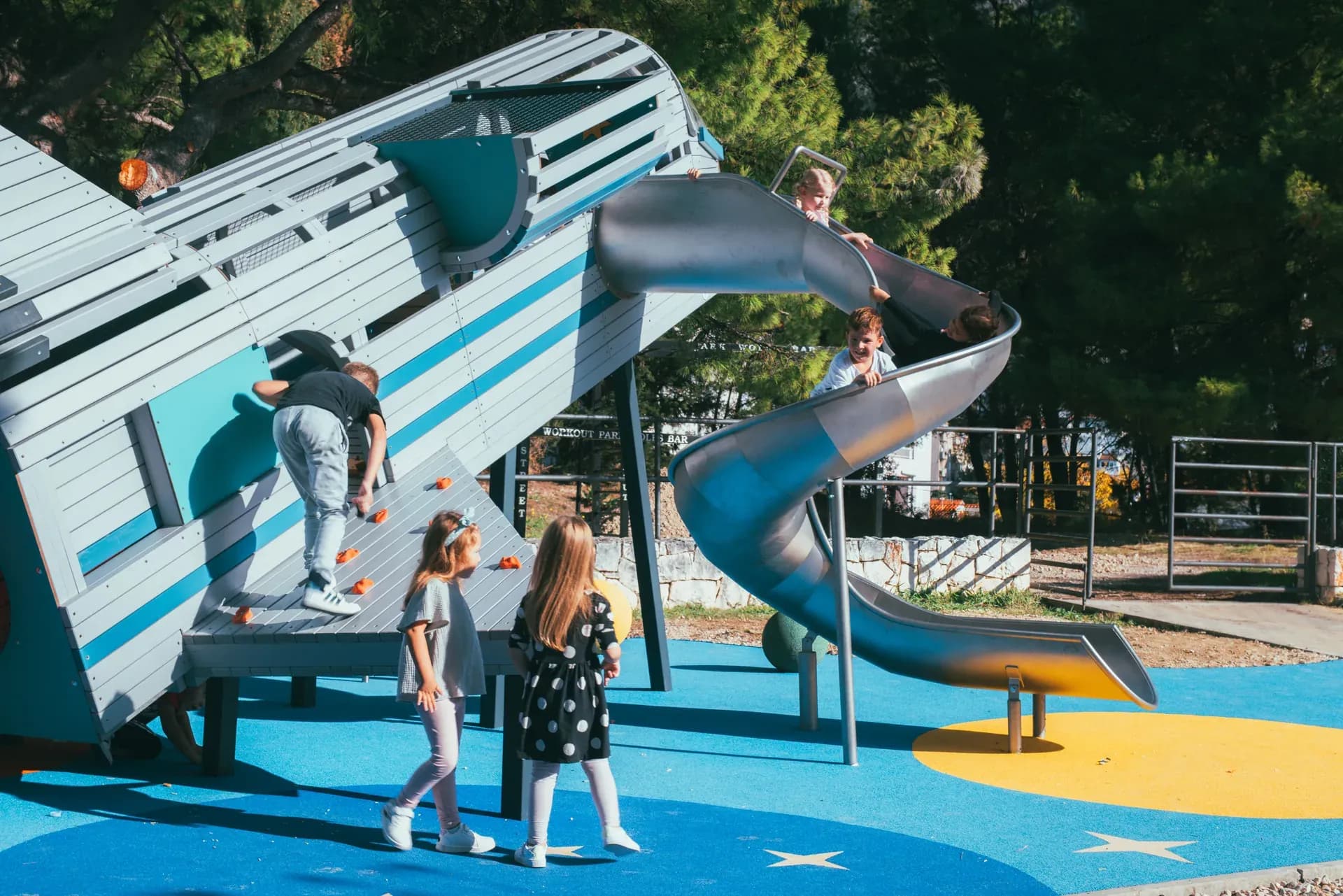
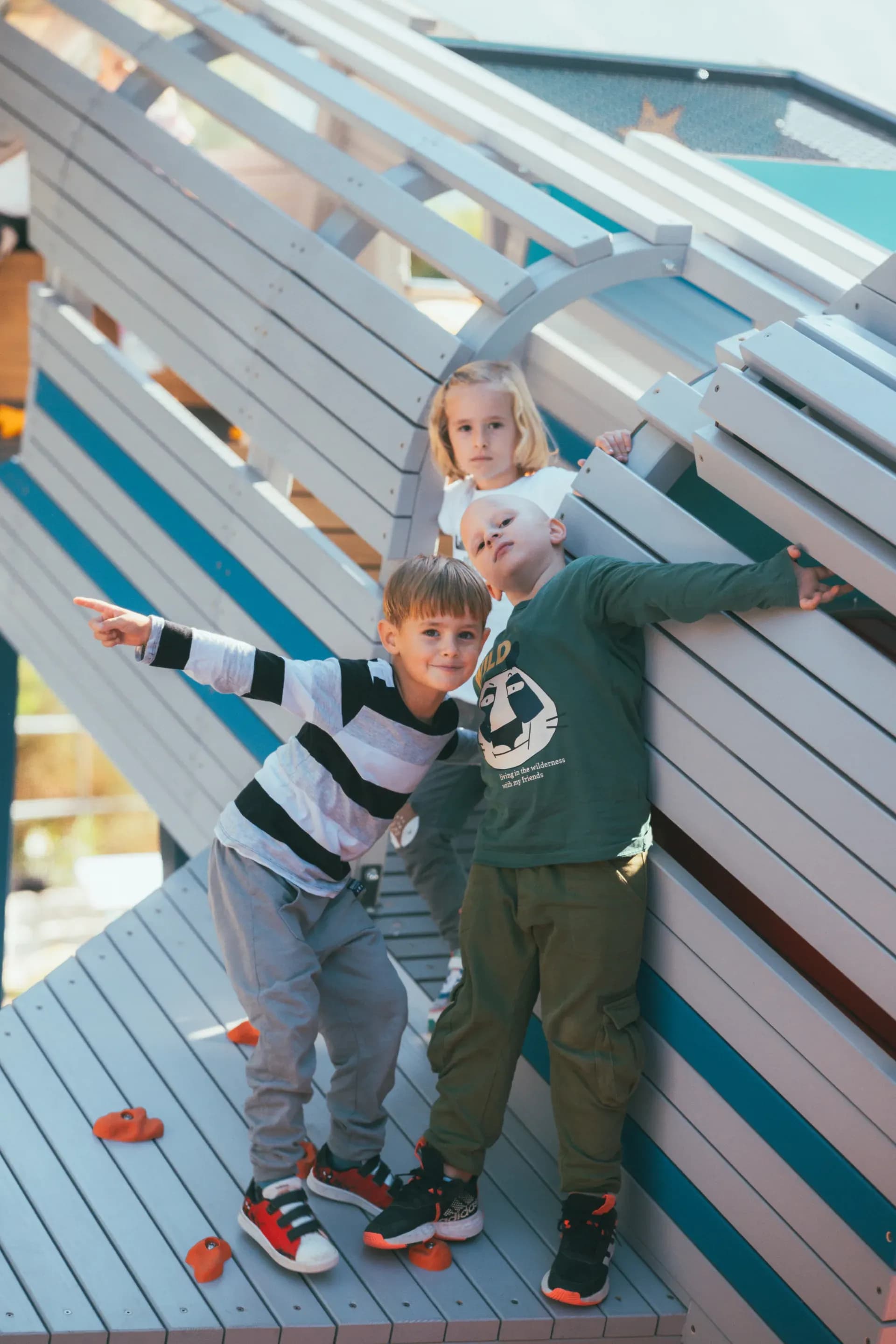
Climbing Wall, An Alternative Route to the Top
For children who don't want ladders, but the challenge of hands and body weight. Different holds and lines adapt to different ages and skill levels. No child is left without their own path upward.
Panoramic Window, A Reward Designed for the Summit
The most striking view on the entire site sits at the very top, and it was placed there deliberately. A child who climbs all the way up understands that immediately, without a word of explanation.
Growth built into every climb.

Physical Development
Climbing nets, balancing, crawling through narrow passages, and descending a spiral slide engage different muscle groups and develop coordination, balance, and body awareness in ways that screens simply cannot replicate.

Social Skills
The space is designed for simultaneous play by children of different ages. They spontaneously negotiate, cooperate, and look out for one another, without anyone telling them to.

Emotional Development and Confidence
Overcoming a fear of heights, choosing the harder route, making it to the top, these are small triumphs that build resilience. A space that offers a real challenge also offers a real sense of achievement.

Connection to Place and the Natural World
The view from the top towards Mount Biokovo isn't a tourist attraction. It's the moment a child from Makarska understands where they live, and why it matters.
A playground that could only exist here.
Makarska Observatory sits on Croatia's Dalmatian coast, in the narrow band of land between Mount Biokovo and the Adriatic Sea. That geography is not a backdrop to this project, it is why a vertical space mission made sense here: a structure that climbs, the way the land around it climbs from the shoreline to the mountain.
Our job wasn't to design equipment. It was to design an experience, and to make sure that every form, every material, and every view from the top speaks the same language as the very first line on paper.
Childhood isn't measured in square metres. It's measured in adventures.
Fly to the Moon wasn't born out of a need to fill an empty plot of land. It was born out of a conviction that every public space designed for children can, and should, be something that stays with them.
Not as a photograph on a phone. But as a memory held in the body. As the knowledge that you were up there. That you saw the sea from above. That you got there, on your own, with your own hands and feet, exactly where you wanted to go.
Ready to shape space together?
Every project starts with understanding the space and the people who will use it. Whether you are planning a project or exploring ideas, this is where the conversation begins.