

Installation, maintenance & lifecycle
How a playground is installed, from site preparation and foundations to surfacing and final checks, and how inspection, maintenance, spare parts and lifecycle planning keep it safe over time. Installation and maintenance are organised according to the agreed project scope, and regular inspection continues throughout the playground’s life.
A playground is only as safe as its installation and the care it receives afterwards. This category explains what happens once a playground is chosen: site preparation, foundations, coordinated installation, safety surfacing and final checks, and then the inspection, maintenance, spare parts and lifecycle planning that keep it safe and functional over the years. It is written for cities, municipalities, investors and facility managers who want an installation done properly and a maintenance plan that protects both safety and the value of the investment. Because sites and projects differ, installation and maintenance are organised according to the agreed project scope and the manufacturer’s instructions, and checked against local requirements.
What you’ll learn
- How installation proceeds from site preparation to a final check.
- Why foundations and safety surfacing are critical to safety.
- What the different types of inspection are and how they are planned.
- Why maintenance and timely spare-part replacement matter.
- How lifecycle planning protects safety and the value of the investment.
- What a public playground maintenance plan typically includes.
- Why a final check at handover does not replace ongoing inspection.
 Checklist
Playground Handover Checklist for Cities and Municipalities
A practical checklist for cities: what to confirm at handover and set up for the ongoing lifecycle of a playground.
 Explanation
Inspection, Maintenance and Certification: What's the Difference?
Inspection, maintenance and certification are different responsibilities. A guide for municipalities on what each covers and who is accountable.
 Guide
GuidePlayground Maintenance: What It Covers and How to Plan It
What routine playground maintenance covers, from inspections to surfacing upkeep, and how public investors can plan it effectively.
 Explanation
Site Preparation and Foundations for Playground Equipment: A Guide for Architects
How ground assessment, drainage and foundation choice shape playground installation, a practical guide for architects and specifiers.
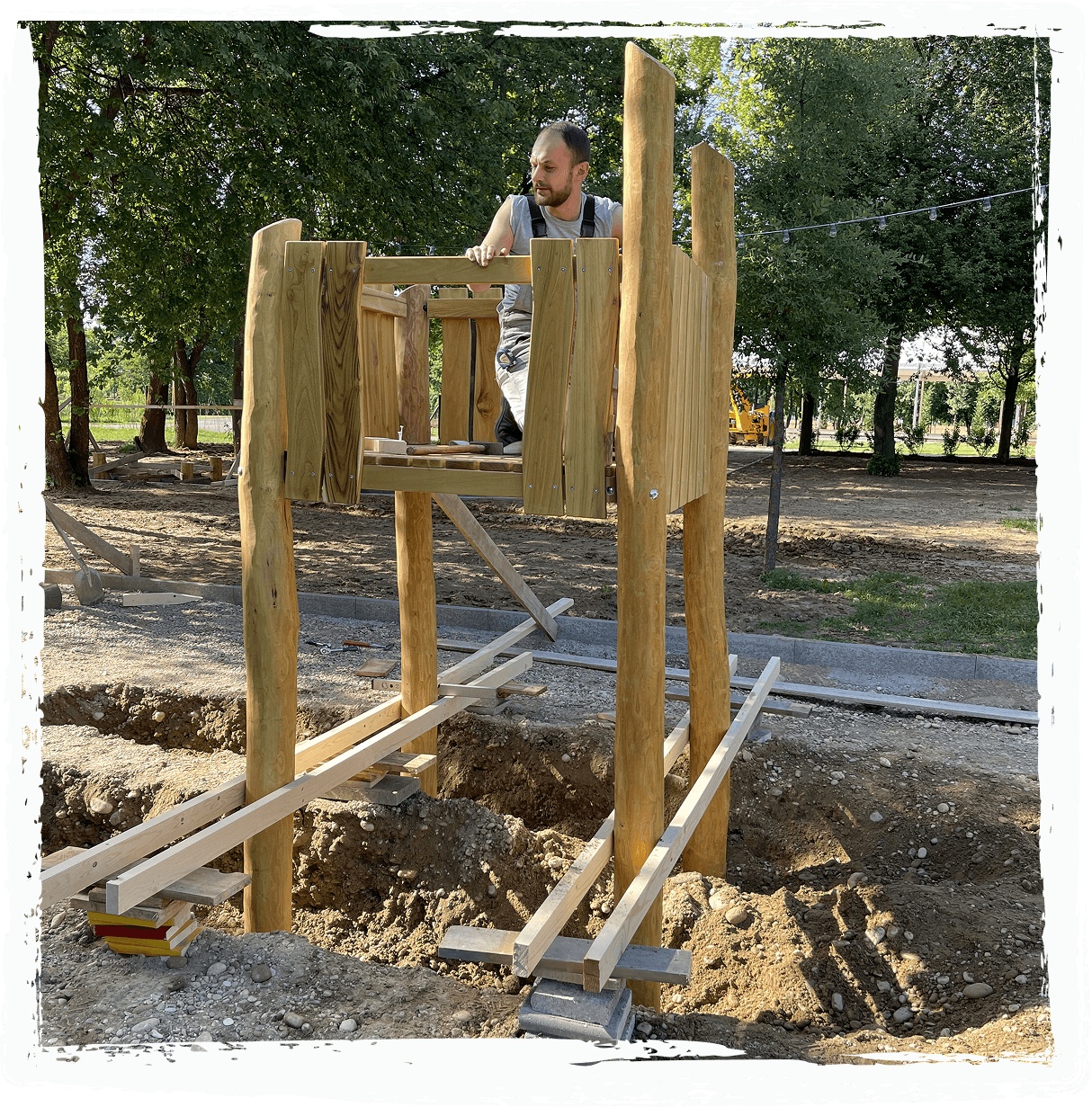 How to
How Playground Installation Works: From Site Preparation to Final Inspection
How playground installation proceeds step by step, from site preparation and foundations to surfacing and the final check before opening, plus what happens afterwards.
Frequently asked questions
- How is a playground installed?
- Installation is organised and supervised according to the agreed project scope. It generally covers site preparation and marking, foundations, assembling equipment according to the manufacturer’s instructions, installing safety surfacing, and a final check before the playground opens for use. The exact steps and responsibilities depend on the project, the site and the contract, so they are confirmed for each case rather than assumed.
- How long does playground installation take?
- It depends on the size and complexity of the project, the surfacing, site conditions and weather. Smaller playgrounds are often installed in a few days, while larger or themed structures can take longer. Because these factors vary, the schedule is set in the installation plan for the specific project rather than promised as a fixed duration.
- What does public playground maintenance include?
- Maintenance typically combines routine visual checks, more detailed operational inspections and an annual main inspection, along with tightening connections, servicing moving parts, renewing surfacing and replacing worn parts in good time. Maintenance is ongoing and not optional. It is what keeps a playground safe and usable, and it should follow a plan suited to the site and its use.
- What is the difference between a final check and regular inspection?
- A final check (or handover inspection) confirms the playground was installed correctly and is ready to open. Regular inspections happen throughout its life to catch wear, damage and hazards as they develop. The final check does not replace ongoing inspection; both are needed, and the inspection schedule should be part of the maintenance plan.
- How long does a playground last, and what is lifecycle planning?
- Lifespan depends on materials, quality, use and maintenance, so it varies by project. Lifecycle planning means anticipating inspection, servicing, spare parts and eventual replacement from the start, rather than reacting only when something breaks. It protects safety, keeps the playground usable and helps owners budget for the long term.
- Does REDOX install every playground itself?
- Yes. REDOX installs its playgrounds with its own in-house installation teams, without subcontractors; the exact scope of installation and site preparation is defined in the contract for each project.

Have a question about your playground project?
Our team can help you apply what you have learned here, from safety standards to material choices, to your own kindergarten, school, park or public space project.